The Rift
V. Y. Mudimbe
Translated by Marjolijn de Jager
This work of fiction explores textuality, writing, solitude and death in the context of contemporary African life, and at the same time examines the constitution and materiality of African subjectivity.
“Offers an intricate, subtle, and richly allusive meditation on a singular, very specifically demarcated, ‘postcolonial condition’: that of the France-educated, masculine (but ambiguously sexualized) African intellectual, Ahmed Nara.” --Neil Lazarus, Brown University
This novel from Zaire poses fascinating questions about the nature of history, the value of language, and the problem of personal identity. At its core is a personal journal written by a young African historian the week before his unexplained death and authenticated by a fellow academic to whom the journal is entrusted. Several threads wind through the historian’s diar
his ongoing research on the Kuba people, sessions with a psychiatrist to understand the past, and relationships with two women, a European and an African. One of the historian’s goals is to ‘decolonize knowledge,’ to shatter stereotypes of Africa perpetuated by Western historians. But he recognizes the treacherous nature of language, wondering if his own words will really represent the Kuba faithfully and recognizing that words can be used as ‘Band-aids’ to hide the misery of reality.” Choice
Tags
This work of fiction explores textuality, writing, solitude and death in the context of contemporary African life, and at the same time examines the constitution and materiality of African subjectivity.
"Offers an intricate, subtle, and richly allusive meditation on a singular, very specifically demarcated, 'postcolonial condition': that of the France-educated, masculine (but ambiguously sexualized) African intellectual, Ahmed Nara." -Neil Lazarus
$20.00 cloth/jacket ISBN 978-0-8166-2312-9
136 pages, 5 1/2 x 8 1/2, 1993
Marjolijn de Jager translates from both French and Dutch, and was also the translator of Marc Augé’s Oblivion (1993). She teaches literary translation at New York University.
This novel from Zaire poses fascinating questions about the nature of history, the value of language, and the problem of personal identity. At its core is a personal journal written by a young African historian the week before his unexplained death and authenticated by a fellow academic to whom the journal is entrusted. Several threads wind through the historian’s diar
his ongoing research on the Kuba people, sessions with a psychiatrist to understand the past, and relationships with two women, a European and an African. One of the historian’s goals is to ‘decolonize knowledge,’ to shatter stereotypes of Africa perpetuated by Western historians. But he recognizes the treacherous nature of language, wondering if his own words will really represent the Kuba faithfully and recognizing that words can be used as ‘Band-aids’ to hide the misery of reality.” Choice

About This Book
Related Publications
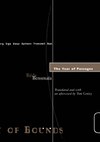
The Year of Passages
Straddling the boundary between fiction and nonfiction, this rich and unconventional novel provokes thought at the turn of every page. The tale is narrated by a North African author exiled to the United States because he has been condemned by religious fanatics after the publication of his novel entitled Dead Letters. Bensmaïa's knowledge of the history, the literature, and the philosophical ideas of our times underlies the novel without intruding into it directly.
Manna
for the Mandelstams for the Mandelas
A lyrical meditation on political resistance by a preeminent feminist thinker-now in paperback!
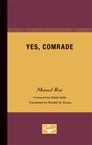
Yes, Comrade
Yes Comrade! comprises five short stories set in Angola during the revolutionary times of the 1960s and early 1970s. Based on immediate events and using cultural and linguistic codes, Rui explores the ramifications of political independence and nation-state formation. Fascinating and intricate, the stories of Yes Comrade! emerge as telling fictional portrayals of an extremely complex political and cultural scenario.