Writing the Love of Boys
Origins of Bishōnen Culture in Modernist Japanese Literature

Despite its centuries-long tradition of literary and artistic depictions of love between men, around the fin de siècle Japanese culture began portraying same-sex desire as immoral. Jeffrey Angles looks at the response to this mindset and focuses on key writers, examining how they experimented with new language, genres, and ideas to find fresh ways to represent love and desire between men.
Writing the Love of Boys makes an important contribution to the study of sexuality in modern Japan. Jeffrey Angles thoughtfully examines the representation of male-male sexuality in the work of three prewar Japanese writers, offering insightful commentary on the specific features of how each writer depicts male-male desire and uses their texts as a lens through which to explore larger currents in the literary and sexual culture of the time.
Jim Reichert, author of In the Company of Men: Representations of Male-Male Sexuality in Meiji Literature
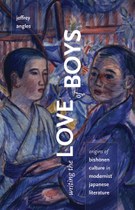
Despite its centuries-long tradition of literary and artistic depictions of love between men, around the fin de siècle Japanese culture began to portray same-sex desire as immoral. Writing the Love of Boys looks at the response to this mindset during the critical era of cultural ferment between the two world wars as a number of Japanese writers challenged the idea of love and desire between men as pathological.
Jeffrey Angles focuses on key writers, examining how they experimented with new language, genres, and ideas to find fresh ways to represent love and desire between men. He traces the personal and literary relationships between contemporaries such as the poet Murayama Kaita, the mystery writers Edogawa Ranpo and Hamao Shirō, the anthropologist Iwata Jun’ichi, and the avant-garde innovator Inagaki Taruho.
Writing the Love of Boys shows how these authors interjected the subject of male–male desire into discussions of modern art, aesthetics, and perversity. It also explores the impact of their efforts on contemporary Japanese culture, including the development of the tropes of male homoeroticism that recur so often in Japanese girls’ manga about bishōnen love.
Writing the Love of Boys makes an important contribution to the study of sexuality in modern Japan. Jeffrey Angles thoughtfully examines the representation of male-male sexuality in the work of three prewar Japanese writers, offering insightful commentary on the specific features of how each writer depicts male-male desire and uses their texts as a lens through which to explore larger currents in the literary and sexual culture of the time.
Jim Reichert, author of In the Company of Men: Representations of Male-Male Sexuality in Meiji Literature
Angles vividly resurrects a current of Japanese literary modernism—namely, its estheticization of the ‘love of boys’—that previous narratives have obscured. From the perspective of queer history and culture the trio of authors on whom he focuses—Kaita, Ranpo, Taruho—form a fascinating and lastingly influential lineage.
Gregory Pflugfelder, Columbia University
Angles’ study is tightly focused in its scope and subject matter. The book will certainly be of interest to specialists and scholars, but it’s a useful study for anyone interested in Japanese literature in general and the modernist period in particular.
Gay & Lesbian Review
A delightful addition to the growing list of books on Japan between the 1910s and 1930s. It draws on an impressively wide bibliography and yet remains accessible for non-specialist readers.
Japanese Studies
A fascinating glimpse of male-male desire in literature at a time of cultural and political ferment in Japan, and well worth reading by anyone interested in Japanese modernism, Japanese homoeroticism, or boys' love.
Intersections: Gender and Sexuality in Asia and the Pacific
Angles’s book remains a fascinating read and a welcome contribution to our understanding of the literary representation of male-male sexuality in Japan’s twentieth century and beyond.
Japan Forum
Writing the Love of Boys is an engaging and challenging text that encourages readers to interrogate their understanding of boys' love narratives in Japan as more than just a current popular cultural trend.
Transformative Works and Cultures
The limited space of a book review makes it difficult to do justice to the myriad issues brought together in this multifaceted study. Anyone reading to the end [of Writing the Love of Boys] is rewarded with a rich rendering of an extremely important historical and cultural inheritance, which, as Angles compellingly argues, profoundly informs and inspires current Japanese understanding of male-male desire.
Monumenta Nipponica
Note about Japanese Names
Introduction
1. Blow the Blood-Stained Bugle: Murayama Kaita and the Language of Personal Sensation
2. Treading the Edges of the Known World: Homoerotic Fantasies in Murayama Kaita’s Prose
3. The Appeal of the Strange: Same-Sex Desire in Edogawa Ranpo’s Mystery Fiction
4. (Re)Discovering Same-Sex Love: Ranpo and the Creation of Queer History
5. Uninscribing the Adolescent Body: Aesthetic Resistance in Taruho’s Writing
Conclusion: Postwar Legacies
Acknowledgments
Notes
Bibliography
Index