The World Says No to War
Demonstrations against the War on Iraq
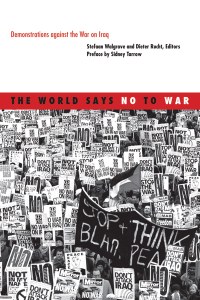
The World Says No to War studies the rally against the invasion of Iraq in 2003 to understand who spoke out, why they did, and how so many people were mobilized for a global demonstration. The contributors analyze how the new tools of the Internet were combined with conventional means of mobilization to rally millions around common goals and against common targets.
Stefaan Walgrave and Dieter Rucht answer a number of questions about how social, political, and movement mobilization contexts interact with national ideological support for the goals of a protest demonstration. This study is unique and innovative.
John D. McCarthy, Penn State
On February 15, 2003, the largest one-day protest in human history took place as millions of people in hundreds of cities marched in the streets, rallying against the imminent invasion of Iraq. This was activism on an unprecedented scale.
The World Says No to War strives to understand who spoke out, why they did, and how so many people were mobilized for a global demonstration. Using surveys collected by researchers from eight countries—Belgium, Britain, Germany, Italy, the Netherlands, Spain, Switzerland, and the United States—The World Says No to War analyzes how the new tools of the Internet were combined with more conventional means of mobilization to rally millions, many with little experience in activism, around common goals and against common targets.
Contributors: W. Lance Bennett, U of Washington; Michelle Beyeler, U Bern; Christian Breunig, U of Toronto; Mario Diani, U of Trento; Terri E. Givens, U of Texas, Austin; Bert Klandermans, Free U Amsterdam; Donatella della Porta, European U Institute; Wolfgang Rüdig, U of Strathclyde; Sidney Tarrow, Cornell U; Peter Van Aelst, U of Antwerp; Joris Verhulst, U of Antwerp.
Stefaan Walgrave and Dieter Rucht answer a number of questions about how social, political, and movement mobilization contexts interact with national ideological support for the goals of a protest demonstration. This study is unique and innovative.
John D. McCarthy, Penn State
The World Says No to War makes a lasting empirical and methodological contribution to those interested in comparative politics and political sociology.
Perspectives on Politics