The Parent as Citizen
A Democratic Dilemma
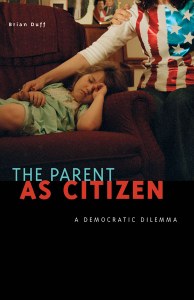
The Parent as Citizen reveals how efforts to make the experience of parenthood inform citizenship contribute to the most persistent problems in modern democracy and democratic theory. Brian Duff explains how influential theories of democratic citizenship rely on the experience of parenthood to help individuals rise to the challenges of politics, and demonstrates that this reliance has unintended consequences.
The Parent as Citizen is superb. Brian Duff has pulled off quite an accomplishment: he takes what seems like a peripheral issue to political theory—the question of parenting—and shows how it infiltrates into the heart of political issues, with corrupting and troublesome effects. Duff shows that parenthood is as much a symptom of as it is the solution to the ills of society. To pose it as some kind of perfect remedy is in fact to preserve the problems of society in the guise of curing them.
James Martel, San Francisco State University
When leaders and citizens in the United States articulate their core political beliefs, they often do so in terms of parenthood and family. But while the motives might be admirable, the results of such thinking are often corrosive to our democratic goals. In The Parent as Citizen, Brian Duff reveals how efforts to make the experience of parenthood inform citizenship contribute to the most persistent problems in modern democracy and democratic theory.
Duff explains how influential theories of democratic citizenship rely on the experience of parenthood to help individuals rise to the challenges of politics, and demonstrates that this reliance has unintended consequences. When parenthood is imagined to instill confidence in political virtue, it uncovers insecurity. When parenthood is believed to inculcate openness to change, it produces fundamentalism. Duff develops this argument through original readings of four theorists of citizenship: Jean-Jacques Rousseau, Friedrich Nietzsche, Richard Rorty, and Cornel West—readings that engage the ways in which these theorists incorporated their personal history into their political thought.
In showing how problems that plagued canonical theorists of citizenship still trouble contemporary thinkers and citizens alike, Duff’s insights are deeply relevant to present-day politics.
The Parent as Citizen is superb. Brian Duff has pulled off quite an accomplishment: he takes what seems like a peripheral issue to political theory—the question of parenting—and shows how it infiltrates into the heart of political issues, with corrupting and troublesome effects. Duff shows that parenthood is as much a symptom of as it is the solution to the ills of society. To pose it as some kind of perfect remedy is in fact to preserve the problems of society in the guise of curing them.
James Martel, San Francisco State University
Duff has thus set the stage to write an engaging work in political theory. The readings are engaging and excellent.
Theory & Event
Family values, fathers’ dreams, mama grizzlies, family dynasties: We talk about politics in family terms. In his intelligent and illuminating study of democratic theory and contemporary politics, Brian Duff explores both the reasons for and dangers of this habit of ours.
Political Theory
Contents
Acknowledgments
Introduction: The Parent and the Citizen
1. Monsters in the Garden: Rousseau on Politics and Parental Virtue
2. The Tragedy of Birth: Nietzsche on Parenthood and Political Contest
3. Troubled Inheritance: Richard Rorty and the Metaphysics of the Child
4. Deadbeat Citizens: Cornel West and the Parent as Prophet
Conclusion: Exposing the Citizen as Parent
Notes
Index
UMP blog: The Politics of Parenthood
1/19/2011
Parenthood plays a central role in the way citizens and politicians think about politics. Take this example: two years ago George W. Bush met with Barack Obama at the White House to give Obama a tour of his future home, and to talk about the job of the Presidency. It was a complex and significant moment in American politics. The economy was in free-fall. The nation was involved in two stagnating wars. A black man had been elected President for the first time. Yet Bush's public reflections on the meeting focused exclusively on parenthood: "Clearly, this guy is going to bring a sense of family to the White House, ... and he wants to make sure that first and foremost, he is a good dad. And I think that's going to be an important part of his presidency.” Read more ...