The Interface
IBM and the Transformation of Corporate Design, 1945–1976
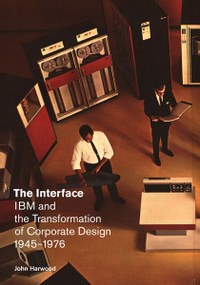
In 1956, IBM tapped the industrial designer and architect Eliot F. Noyes to reinvent the company’s corporate image, from stationery and curtains to typewriters and computers to laboratory and administration buildings. IBM would go on to assemble a cast of leading figures in American design, including Charles Eames, Paul Rand, George Nelson, and Edgar Kaufmann Jr., who transformed the relationships between design, computer science, and corporate culture. The Interface is the first critical history of the industrial design of the computer and an invaluable perspective on the computer and corporate cultures of today.
In this fascinating book, John Harwood shows clearly and convincingly how architects and industrial design consultants calculatedly worked with IBM to shape the public image of the corporation and its products. The Interface is eye-opening.
Henry Petroski, Duke University, author of The Pencil and The Essential Engineer
In February 1956 the president of IBM, Thomas Watson Jr., hired the industrial designer and architect Eliot F. Noyes, charging him with reinventing IBM’s corporate image, from stationery and curtains to products such as typewriters and computers and to laboratory and administration buildings. What followed—a story told in full for the first time in John Harwood’s The Interface—remade IBM in a way that would also transform the relationships between design, computer science, and corporate culture.
IBM’s program assembled a cast of leading figures in American design: Noyes, Charles Eames, Paul Rand, George Nelson, and Edgar Kaufmann Jr. The Interface offers a detailed account of the key role these designers played in shaping both the computer and the multinational corporation. Harwood describes a surprising inverse effect: the influence of computer and corporation on the theory and practice of design. Here we see how, in the period stretching from the “invention” of the computer during World War II to the appearance of the personal computer in the mid-1970s, disciplines once well outside the realm of architectural design—information and management theory, cybernetics, ergonomics, computer science—became integral aspects of design.
As the first critical history of the industrial design of the computer, of Eliot Noyes’s career, and of some of the most important work of the Office of Charles and Ray Eames, The Interface supplies a crucial chapter in the story of architecture and design in postwar America—and an invaluable perspective on the computer and corporate cultures of today.
Awards
2014 Alice Davis Hitchcock Book Award from the Society of Architectural Historians
In this fascinating book, John Harwood shows clearly and convincingly how architects and industrial design consultants calculatedly worked with IBM to shape the public image of the corporation and its products. The Interface is eye-opening.
Henry Petroski, Duke University, author of The Pencil and The Essential Engineer
This is not only a brilliant but a necessary book: design is the future of computing; the IBM design team run by Eliot Noyes was the most important in commercial history, and helped shape not only the industry but the modern world. The book almost couldn’t help being brilliant, given the extraordinary richness and depth of the design team Noyes assembled—a richness never equaled in design history—with Saarinen and Roche, Paul Rand and the Eames Studio plus Noyes himself contributing everything from architecture and graphics to industrial and machine design, films and museum exhibits. Anyone who cares about modern computing, modern design or the future of technology needs this book.
David Gelernter, Yale University
Getting a look inside the box, and figuring out who stuffed the wires in there, is one of the pleasures of The Interface.
The Daily
Harwood . . . explores the most ambitious coordinated design effort in American business. This handsome, wide-ranging book makes clear that IBM’s integrated design effort . . . is the forerunner of and model for Apple’s equally—but by no means more—influential design achievement.
The Atlantic
Harwood... supplies a valuable and quite different perspective on the computer and corporate cultures of today.
Communication Booknotes Quarterly
I have several hopes for this book, but the most dear is that it will contribute to a growing and increasingly sophisticated interdisciplinary discourse on the significance of technics in contemporary life.
ROROTOKO
Harwood’s Interface offers an insightful, engaging, and exquisitely researched account of the design of one of the twentieth century’s most recognizable brands and most ubiquitous objects, the IBM computer.
West 86th
The Interface is an excellent, and in many respects a remarkable, book – one that goes well beyond simply recounting the details of an indisputably important chapter in the history of American corporate design.
Design and Culture
Contents
Introduction: The Interface
1. Eliot Noyes, Paul Rand, and the Beginnings of the IBM Design Program
2. The Architecture of the Computer
3. IBM Architecture: The Multinational Counterenvironment
4. Naturalizing the Computer: IBM Spectacles
Conclusion: Virtual Paradoxes
Acknowledgments
Notes
Index
UMP blog: Happy 100th birthday, IBM.
As IBM is celebrates its centenary today, one might be tempted to ask how IBM actually settled on a birthday.