Multicultural Politics
Racism, Ethnicity, and Muslims in Britain
Tariq Modood
Foreword by Craig Calhoun
Examines the modern problem of religious identity and cultural racism
Tariq Modood describes how what began as a black-white division has been complicated by cultural racism, Islamophobia, and a challenge to secular modernity. If an Islam-West divide is to be avoided in our time, Modood suggests, then Britain, with its relatively successful ethnic pluralism and its easygoing attitude toward religion, will provide a particularly revealing case and promising site for understanding.
Tariq Modood expertly combines empirical findings with theoretical observation and shows that what he has to say about Britain applies to all contemporary Western societies facing the same problems of integration and citizenship.
Krishan Kumar, author of 1989: Revolutionary Ideas and Ideals
If, as W. E. B. Du Bois observed, the problem of the twentieth century was the problem of the color line, the problem of the twenty-first century may be one that reaches back to premodernity: religious identity. Even before 9/11 it was becoming evident that Muslims, not blacks, were perceived as the “other” most threatening to Western society, even in a relatively pluralist nation such as Britain.
In Multicultural Politics, one of the most respected thinkers on ethnic minority experience in England describes how what began as a black-white division has been complicated by cultural racism, Islamophobia, and a challenge to secular modernity. Tariq Modood explores the tensions that have risen among advocates of multiculturalism as Muslims assert themselves to catch up with existing equality agendas while challenging some of the secularist, liberal, and feminist assumptions of multiculturalists. If an Islam-West divide is to be avoided in our time, Modood suggests, then Britain, with its relatively successful ethnic pluralism and its easygoing attitude toward religion, will provide a particularly revealing case and promising site for understanding.
$25.50 paper ISBN 978-0-8166-4488-9
$70.50 cloth ISBN 978-0-8166-4487-2
260 pages, 5 b&w photos, 10 tables, 5 7/8 x 9, 2005
Tariq Modood is professor of sociology, politics, and public policy at the University of Bristol.
Tariq Modood expertly combines empirical findings with theoretical observation and shows that what he has to say about Britain applies to all contemporary Western societies facing the same problems of integration and citizenship.
Krishan Kumar, author of 1989: Revolutionary Ideas and Ideals
Tariq Modood's penetrating insights are fully on display in this splendid book.
Lord Bhikhu Parekh, author of Rethinking Mutliculturalism
Read through to learn about clearly crucial issues.
Multicultural Review
No one can deny Modood’s intellectual force.
The Independent
An eloquent analysis of empirical and theoretical observations of multiculturalism in Britain. Modood is an expert on this topic.
American Journal of Islamic Social Sciences
Tariq Modood, a leading British sociologist, spotlights the disconnection between the brouhaha over ‘Islamic terrorism’ in Britain and the reality of British Muslim life in greater depth than any other works I have read.
Middle East Policy Council
More than anyone else, Modood has helped us to think our way out of existing paradigms in order to incorporate a sense of Muslim subjectivity.
Muslim World Book Review
Multicultural Politics is an essential book. A collection of well-linked essays.
American Journal of Sociology
Contents
Foreword Craig Calhoun
Acknowledgments
Introduction: Racism, Asian Muslims, and the Politics of Difference
Part I. Racisms, Disadvantage, and Upward Mobility
1. “Difference,” Cultural Racism, and Antiracism
2. If Races Do Not Exist, Then What Does? Racial Categorization and Ethnic Realities
3. Ethnic Diversity and Racial Disadvantage in Employment
4. Ethnic Differentials in Educational Performance
Part II. The Muslim Challenge
5. Reflections on the Rushdie Affair: Muslims, Race, and Equality in Britain
6. Muslims, Incitement to Hatred, and the Law
7. Multiculturalism, Secularism, and the State
8. Muslims and the Politics of Multiculturalism
9. Rethinking Multiculturalism and Liberalism
Conclusion: Plural Britishness
Notes
Bibliography
Previous Publications
Index
About This Book
Related Publications
Breaks in the Chain
What Immigrant Workers Can Teach America about Democracy
How immigrants’ stories can transform social power
Modernity, Islam, and Secularism in Turkey
Bodies, Places, and Time
A surprising look at the relation between Islam and modernity
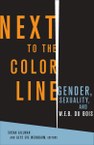
Next to the Color Line
Gender, Sexuality, and W. E. B. Du Bois
Interrogates Du Bois on questions of race, gender, and sex
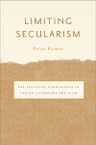
Limiting Secularism
The Ethics of Coexistence in Indian Literature and Film
Questions the impact and ethics of tolerance in South Asian culture
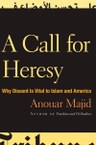
A Call for Heresy
Why Dissent Is Vital to Islam and America
Confronting the fundamentalism that afflicts both Islam and the United States through traditions of dissent
Racial Conditions
Politics, Theory, Comparisons
More than a quarter-century after the passage of civil rights legislation in the United States and decades since the last European colonies attained their independence, race continues to play a central role in cultural, political, and economic life, both in the United States and around the globe. Howard Winant argues that race cannot be understood as a “social problem” or as a “survival” of earlier, more benighted ages. Indeed, from the rise of Europe to the present, race has been a social condition, a permanent though flexible feature of human society and identity. Among the topics discussed are the relationship between race and class, as well as the racial dimensions of gender, diaspora, colonialism, and fascism. Other key topics include the changing nature of racial identity in the post-civil rights era, the 1992 Los Angeles riot, and politics of race in Brazil.