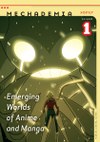
Mechademia 4
War/Time
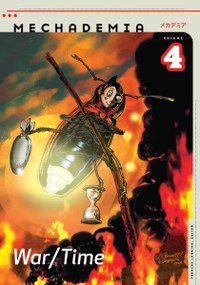
Delving into topics ranging from the production of wartime propaganda to the multimedia adaptations of romance narrative, contributors to the fourth volume in the Mechademia series address the political, cultural, and technological continuum between war and the everyday time of orderly social productivity that is reflected, confronted, and changed in manga, anime, and other forms of Japanese popular culture.
Now that Mechademia has hit its stride, it remains a valuable resource for fans looking to go deeper in their understanding of anime, manga, and Japanese culture.
Comics Worth Reading
The themes of war and time are intertwined in unique ways in Japanese culture, freighted as that nation is with the multiple legacies of World War II: the country’s militarization, its victories and defeats, Hiroshima and Nagasaki, and the uneasy pacifism imposed by the victors. Delving into topics ranging from the production of wartime propaganda to the multimedia adaptations of romance narrative, contributors to the fourth volume in the Mechademia series address the political, cultural, and technological continuum between war and the everyday time of orderly social productivity that is reflected, confronted, and changed in manga, anime, and other forms of Japanese popular culture.
Grouped thematically, the essays in this volume explore the relationship between national sovereignty and war (from the militarization of children as critically exposed in Grave of the Fireflies to reworkings of Japanese patriotism in The Place Promised in Our Early Days), the intersection of war and the technologies of social control (as observed in the films of Oshii Mamoru and the apocalyptic vision of Neon Genesis Evangelion), history and memory (as in manga artists working through the trauma of Japan’s defeat in World War II and the new modalities of storytelling represented by Final Fantasy X), and the renewal and hybridization of militaristic genres as a means of subverting conventions (in Yamada Futaro’s ninja fiction and Miuchi Suzue’s girl knight manga).
Contributors: Brent Allison; Mark Anderson; Christopher Bolton, Williams College; Martha Cornog; Marc Driscoll, U of North Carolina, Chapel Hill; Angela Drummond-Mathews, Paul Quinn College; Michael Fisch; Michael Dylan Foster, Indiana U; Wendy Goldberg; Marc Hairston, U of Texas, Dallas; Charles Shiro Inouye, Tufts University; Rei Okamoto Inouye, Northeastern U; Paul Jackson; Seth Jacobowitz, San Francisco State U; Thomas Lamarre, McGill U; Tom Looser, New York U; Sheng-mei Ma, Michigan State U; Christine Marran, U of Minnesota; Zilia Papp, Hosei U, Tokyo; Marco Pellitteri; Timothy Perper; Yoji Sakate; Chinami Sango; Deborah Scally; Deborah Shamoon, U of Notre Dame; Manami Shima; Rebecca Suter, U of Sydney; Takayuki Tatsumi, Keio U, Tokyo; Christophe Thouny; Gavin Walker; Dennis Washburn, Dartmouth College; Teresa M. Winge, Indiana U.
Now that Mechademia has hit its stride, it remains a valuable resource for fans looking to go deeper in their understanding of anime, manga, and Japanese culture.
Comics Worth Reading
An insightful, creative compilation, War/Time is a solid contribution to the Mechademia franchise, building upon and broadening the series’ far-reaching expedition in to the many facets of contemporary anime, manga, and its international fan community.
Paradoxa
The Mechademia series in general should be commended for its willingness to take chances on unusual methods and mixed media, and I hope that this aspect of its mission becomes more and more central over time. . . . Mechademia’s continued willingness to experiment deserves our praise and attention.
International Journal of Communication
This series remains one of the most vital, important venues for new research into contemporary Japanese graphic-narratives.
Electronic Journal of Contemporary Japanese Studies
Extraordinarily diverse and complex.
ImageText