Liberating Shahrazad
Feminism, Postcolonialism, and Islam
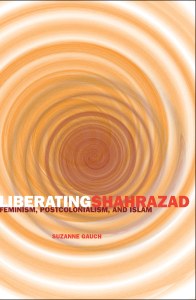
Suzanne Gauch analyzes how postcolonial writers and filmmakers from Algeria, Morocco, and Tunisia have reclaimed the storyteller in order to portray Muslim women in ways that highlight their power to shape their own destinies. Gauch demonstrates how these new depictions of Shahrazad from artists such as Fatima Mernissi, Assia Djebar, and Leïla Sebbar reshape the stories told about the Islamic world.
Shahrazad has staged a comeback. But this legendary storyteller is not the desperate, wily victim of a murderous tyrant that Western writers have depicted. Instead, in recent Maghrebian versions, she is a powerful Arab woman representing other powerful women with alternative visions for their society—women who are not afraid to speak truth to power. Pointing out that storytelling is intricately bound up with violence and identity, freedom and survival, Gauch examines the ways in which contemporary Arab Muslim women’s voices are made possible and effective. This is an engaging study of Francophone North African intellectuals’s various invocations of this medieval muse.
Choice
Shahrazad, the legendary fictional storyteller who spun the tales of the 1,001 Arabian Nights, has long been rendered as a silent exotic beauty by Western film and fiction adaptations. Now, she talks back to present a new image of Muslim women.
In Liberating Shahrazad, Suzanne Gauch analyzes how postcolonial writers and filmmakers from Algeria, Morocco, and Tunisia have reclaimed the storyteller in order to portray Muslim women in ways that highlight their power to shape their own destinies. Gauch looks at Maghrebian works that incorporate Shahrazad’s storytelling techniques into unexpected and unforeseen narratives. Highlighting the fluid nature of storytelling, Gauch demonstrates how these new depictions of Shahrazad—from artists such as Moufida Tlatli, Fatima Mernissi, Tahar Ben Jelloun, Assia Djebar, and Leïla Sebbar—navigate the demands of a global marketplace, even as they reshape the stories told about the Islamic world.
In the face of both rising fundamentalism and proliferating Western media representations of Arab and Muslim women as silent, exploited, and uneducated victims, Gauch establishes how contemporary works of literature and film revive the voice of a long-silenced Shahrazad—and, ultimately, overthrow oppressive images of Muslim women.
Shahrazad has staged a comeback. But this legendary storyteller is not the desperate, wily victim of a murderous tyrant that Western writers have depicted. Instead, in recent Maghrebian versions, she is a powerful Arab woman representing other powerful women with alternative visions for their society—women who are not afraid to speak truth to power. Pointing out that storytelling is intricately bound up with violence and identity, freedom and survival, Gauch examines the ways in which contemporary Arab Muslim women’s voices are made possible and effective. This is an engaging study of Francophone North African intellectuals’s various invocations of this medieval muse.
Choice
Drawing on a rich variety of texts, Gauch has assembled an erudite, multifarious compilation of critical analysis and cultural knowledge. Liberating Shahrazad is a model of scholarly pursuit—required reading not only for those interested in Islamic patrimony and culture but also for anybody seeking insight into North African literature.
Women’s Review of Books
Cogently articulated, well supported, and convincing. This scholarly work will appeal to a wide-ranging audience in comparative literature, literary and film studies, women’s studies, and Francophone studies.
Research in African Literatures
Gauch offers complex interpretations of these provocative texts through generally engaging and perceptive analyses.
Arab Studies Quarterly