From Cannibals to Radicals
Figures and Limits of Exoticism
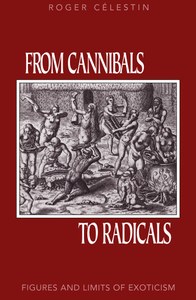
In this fascinating analysis, Roger Célestin examines the concept of exoticism from a historical and literary perspective. Through close readings of works by Montaigne, Diderot, Flaubert, Barthes, and Naipaul, Célestin examines the way these writers have challenged representations of cultural identity in their time.
A cogent and convincing rethinking of ‘exoticism’ through readings of Montaigne, Diderot, Flaubert, Barthes, and Naipaul. Provocative in its analyses, From Cannibals to Radicals explores the hybrid and permeable nature of literary production by stressing the shifting crises of representation in their philosophical, anthropological, and historical contexts.
Joan Dayan, University of Arizona
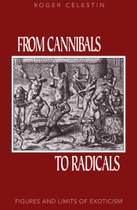
In this fascinating analysis, Roger Célestin examines the concept of exoticism from a historical and literary perspective. Through close readings of works by Montaigne, Diderot, Flaubert, Barthes, and Naipaul, Célestin examines the way these writers have challenged representations of cultural identity in their time.
Célestin begins with a survey of previous treatments of exoticism in literature, philosophy, political theory, and anthropology. He then argues that the authors under study use exoticism both to interrogate dominant discourses of “home” (in its various forms of empire, Europe, and the center) and to negotiate a tension between home and the exotic rather than opting for one or the other. The texts produced by these authors are the visible signs of this negotiation, and From Cannibals to Radicals examines the figures and tactics of negotiation as they appear in such works as Montaigne’s Essays, Flaubert’s Salammbô, and Barthes’s Empire of Signs.
Célestin shows how, since these writers operate in succeeding chronological periods, they are also to a certain extent representative of their respective historical and cultural moments. Montaigne reflects the general Renaissance discovery of the exotic Other. Diderot demonstrates the French Enlightenment philosophers' widespread use of the exotic as an exemplar and as tool for destabilizing the ruling codes of Home. Flaubert represents a general nineteenth-century aesthetic of oriental exoticism. Barthes enables us to observe the poststructualist focus on language as “inherited past” to be dismantled: the exotic beomes the utopia of language. Finally, V. S. Naipaul’s travels display the limits of exoticism on the postcolonial planet.
Using exoticism as a critical tool rather than as an object of study, From Cannibals to Radicals clarifies its uses as a mode of representation from the Renaissance to the current postcolonial era.
A cogent and convincing rethinking of ‘exoticism’ through readings of Montaigne, Diderot, Flaubert, Barthes, and Naipaul. Provocative in its analyses, From Cannibals to Radicals explores the hybrid and permeable nature of literary production by stressing the shifting crises of representation in their philosophical, anthropological, and historical contexts.
Joan Dayan, University of Arizona