F Is for Phony
Fake Documentary and Truth’s Undoing
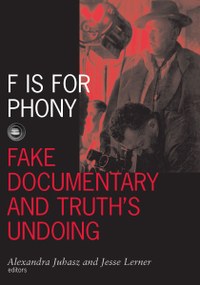
The essays in F Is for Phony discuss a broad scope of works and explore issues raised by “fake docs” such as the fiction/documentary divide and the ethics of reality-based manipulation.
Contributors: Steve Anderson, Catherine L. Benamou, Mitchell W. Block, Luis Buñuel, Marlon Fuentes, Craig Hight, Charlie Keil, Alisa Lebow, Eve Oishi, Robert F. Reid-Pharr, Gregorio C. Rocha, Jane Roscoe, Catherine Russell, Nizan Shaked, Elisabeth Subrin.
F is for Phony provides stimulating thought, if not answers, about fakery and truth in documentaries.
Documentary Magazine
Fake documentaries mimic documentary genre expectations, unraveling the documentary’s authority and dismantling understandings of identity, history, and nation. The interdisciplinary essays in F Is for Phony discuss a broad scope of works and explore issues raised by “fake docs” such as the fiction/documentary divide, the ethics of reality-based manipulation, and whether documentariness derives from form or reception.
Defining the borderline between fact and fiction, the contributors reveal what fake documentaries imply and usually make explicit: that many documentaries lie to tell the truth, and that the truth is relative.
Contributors: Steve Anderson, Catherine L. Benamou, Mitchell W. Block, Luis Buñuel, Marlon Fuentes, Craig Hight, Charlie Keil, Alisa Lebow, Eve Oishi, Robert F. Reid-Pharr, Gregorio C. Rocha, Jane Roscoe, Catherine Russell, Elisabeth Subrin.
F is for Phony provides stimulating thought, if not answers, about fakery and truth in documentaries.
Documentary Magazine
Contents
Introduction: Phony Definitions and Troubling Taxonomies of the Fake Documentary Alexandra Juhasz and Jesse Lerner
PART I. HISTORY AS BUNK
1 Steel Engines and Cardboard Rockets: The Status of Fiction and Nonfiction in Early Cinema Charlie Keil
2 La Venganza de Pancho Villa: A Lost and Found Border Film Gregorio C. Rocha
3 Trashing Shulie: Remnants from Some Abandoned Feminist History Elisabeth Subrin
4 No Lies about Ruins Jesse Lerner
5 The Past in Ruins: Postmodern Politics and the Fake History Film Steve Anderson
PART II. DOUBLE- CROSS CULTURAL FILMMAKING
6 Land without Bread Luis Buñuel
7 Surrealist Ethnography: Las Hurdes and the Documentary Unconscious Catherine Russell
8 Extracts from an Imaginary Interview: Questions and Answers about Bontoc Eulogy Marlon Fuentes
9 Makes Me Feel Mighty Real: The Watermelon Woman and the Critique of Black Visuality Robert F. Reid-Pharr
PART III. DECEPTION
10 The Artifice of Realism and the Lure of the “Real” in Orson Welles’s F for Fake and Other T(r)eas(u)er(e)s Catherine L. Benamou
11 Forgotten Silver: A New Zealand Television Hoax and Its Audience Craig Hight and Jane Roscoe
12 The Truth about No Lies (If You Can Believe It) Mitchell W. Block
13 Screen Memories: Fakeness in Asian American Media Practice Eve Oishi
PART IV. CONCLUSIONS
14 Faking What? Making a Mockery of Documentary Alisa Lebow
15 As a Finale: Reflections on a Phantasm Alexandra Juhasz and Jesse Lerner
Filmography Nizan Shaked
Contributors
Index