El Paso
Local Frontiers at a Global Crossroads
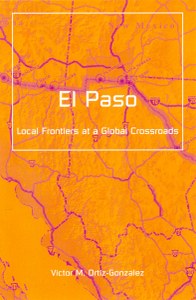
This book argues that amid the abstractions generated by globalization, people in cities on the U.S.–Mexican border are living the gritty realities of a new world order. Balancing ethnographic detail with theoretical insights, it offers a compelling case study and a stirring call to understand the challenge and the social urgency of the effects of globalization in local settings.
Victor M. Ortiz-Gonzalez draws an intricate and complex picture of the array of people who have struggled in this border environment, and brings out the humanity and social reality of El Paso in poignant ways.
Robert Alvarez, University of California, San Diego
Every marker of social difference can be easily interpreted in the fashionable language of “borderlands”—and if so, as Victor M. Ortiz-Gonzalez reveals, the practical reality of the border region is often grossly misrepresented and its people woefully served. He argues that amid the tantalizing abstractions generated by the sweeping reconfigurations of globalization, people in cities like El Paso and Ciudad Juárez, on the U.S.–Mexican border, are actually living the gritty realities of a new world order.
With descriptions of grassroots initiatives to confront the challenges and opportunities that NAFTA represents for the city, El Paso challenges us to acknowledge and address the conceptual and sociopolitical tasks of a world in which abstract representations and non-local interests override concrete situations. Ortiz-Gonzalez also provides an in-depth analysis of groups such as La Mujer Obrera, Unite El Paso, and the Hispanic Chamber of Commerce and their attempts to give local residents and workers more autonomy and power.
Balancing ethnographic detail with precise theoretical insights, El Paso offers a compelling case study and a stirring call to understand both the conceptual challenge and the social urgency of the effects of globalization in local settings.
Victor M. Ortiz-Gonzalez draws an intricate and complex picture of the array of people who have struggled in this border environment, and brings out the humanity and social reality of El Paso in poignant ways.
Robert Alvarez, University of California, San Diego
Contents
Preface: Who Owns the Border?
Introduction: Otherness and Globalization on the U.S.–Mexican Border and Beyond
1. Between an Image and a Hard Place
2. Undermining Reality
3. La Vista Grande: The Common Ground of Displacements and Breakthroughs
4. Local Democracy and Global Demography: New Parameters of Community
Conclusion: El Paso as an Eternal— Yet Not Final— Frontier
Works Cited
Index