Dubai, the City as Corporation
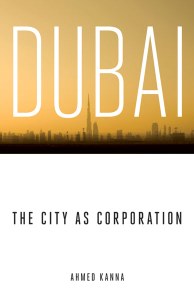
Dubai, the City as Corporation reveals the role of cultural and political forces in shaping the image and reality of Dubai. Ahmed Kanna offers an instructive picture of how different factions have participated in the creation and marketing of Dubai, providing an unparalleled account of how the built environment shapes and is shaped by globalization and neoliberalism in a diverse, multinational city.
Dubai, the City as Corporation is a thoughtful, in-depth treatment on Dubai and its recent explosive economic growth, grounded in the urban studies/spatial theory of Henri Lefebvre. Engaging and persuasive, it knits together anthropology and urban design, giving a balanced assessment of Dubai’s reinvention as a city, a global commerce center, and an experiment in urban planning.
Timothy Luke, Virginia Tech
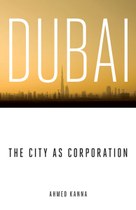
Somewhere in the course of the late twentieth century, Dubai became more than itself. The city was, suddenly, a postmodern urban spectacle rising from the desert—precisely the glittering global consumer utopia imagined by Dubai’s rulers and merchant elite. In Dubai, the City as Corporation, Ahmed Kanna looks behind this seductive vision to reveal the role of cultural and political forces in shaping both the image and the reality of Dubai.
Exposing local struggles over power and meaning in the making and representation of Dubai, Kanna examines the core questions of what gets built and for whom. His work, unique in its view of the interconnectedness of cultural identity, the built environment, and politics, offers an instructive picture of how different factions—from local and non-Arab residents and expatriate South Asians to the cultural and economic elites of the city—have all participated in the creation and marketing of Dubai.
The result is an unparalleled account of the ways in which the built environment shapes and is shaped by the experience of globalization and neoliberalism in a diverse, multinational city.
Dubai, the City as Corporation is a thoughtful, in-depth treatment on Dubai and its recent explosive economic growth, grounded in the urban studies/spatial theory of Henri Lefebvre. Engaging and persuasive, it knits together anthropology and urban design, giving a balanced assessment of Dubai’s reinvention as a city, a global commerce center, and an experiment in urban planning.
Timothy Luke, Virginia Tech
Dubai: The City as Corporation is a welcome and refreshing study of the nuanced and overlapping ideologies that made Dubai the global city that it is today, and how Dubai’s diverse residents engage with the city and its transformations.
The Middle East Journal
Kanna’s book offers a critical examination of the state structures of domination in Dubai, a subject clearly in need of attentive scholarly investigation. His analysis successfully demonstrates how the cultural, political and economic practices of the ruling ethnic group are constitutive in reproducing the unequal city-state.
Reviews in Cultural Theory
The book sets a perfect example for combining anthropology with urban studies.
Urban Studies
Kanna’s book provides numerous insights not only for our readings of cities in the Arab/Persian Gulf, but also more generally about global city theory and the ways in which it can be approached through the hybrid lens of space.
International Journal of Urban and Regional Research
Preface
Note on Transliteration
Introduction: Dubai Contexts and Contestations
1. State, Citizen, and Foreigner in Dubai
2. “Going South” with the Starchitects: Urbanist Ideology in the Emirati City
3. The Vanished Village: Nostalgic and Nationalist Critiques of the New Dubai
4. The City-Corporation: Young Professionals and the Limits of the Neoliberal Response
5. Indian Dubai: The Identity Politics of South Asian Immigrants
Conclusion: Politicizing Dubai Space
Acknowledgments
Notes
Bibliography
Index