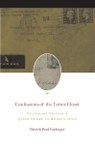
Covert Gestures
Crypto-Islamic Literature as Cultural Practice in Early Modern Spain
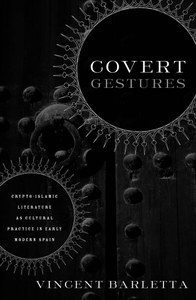
Covert Gestures reveals how the traditional Islamic narratives of the moriscos both shaped and encoded a wide range of covert social activity characterized by a profound and persistent concern with time and temporality. Using a unique blend of literary analysis, linguistic anthropology, and phenomenological philosophy, Vincent Barletta explores the narratives as testimonials of past human experiences and discovers in them evidence of community resistance.
Covert Gestures is profoundly engaging and beautifully written, the work of a literary scholar and ethnographer who has uniquely fused two traditions.
Marjorie Harness Goodwin, University of California, Los Angeles
Forcibly expelled from Spain in the early seventeenth century, the substantial Muslim community known as the moriscos left behind a hidden yet extremely rich corpus of manuscripts. Copied out in Arabic script and concealed in walls, false floors, and remote caves, these little-known texts now offer modern readers an absorbing look into the cultural life of the moriscos during the hundred years between their forced conversion to Christianity and their eventual expulsion.
Covert Gestures reveals how the traditional Islamic narratives of the moriscos both shaped and encoded a wide range of covert social activity characterized by a profound and persistent concern with time and temporality. Using a unique blend of literary analysis, linguistic anthropology, and phenomenological philosophy, Barletta explores the narratives as testimonials of past human experiences and discovers in them evidence of community resistance.
In its interdisciplinary approach, Vincent Barletta’s work is nothing less than a rewriting of the cultural history of Muslim Spain, as well as a replotting of the future course of medieval and early modern literary studies.
Awards
Winner of the International Congress on Medieval Studies’s La Corónica International Book Award
Covert Gestures is profoundly engaging and beautifully written, the work of a literary scholar and ethnographer who has uniquely fused two traditions.
Marjorie Harness Goodwin, University of California, Los Angeles
An important, highly suggestive study that pioneers an ethnography of cultural and textual practice on the frontiers of two cultures that were in constant contact and conflict.
E. Michael Gerli, University of Virginia
Contents
Introduction: The Fabric of Time
1. Toward an Activity-Centered Approach to Aljamiado-Morisco Narrative
2. Written Narrative and the Human Dimension of Time
3. Contexts of Rediscovery, Contexts of Use
4. The Prophet Is Born, Muslims Are Made
5. A Morisco Philosophy of Suffering and Action
6. Language Ideologies and Poetic Form
Conclusions
Acknowledgments
Notes
Bibliography
Index