Black and Indigenous
Garifuna Activism and Consumer Culture in Honduras

Garifuna live in Central America and the United States. Identified as Black by others and by themselves, they paradoxically also claim indigenous status and rights in Latin America. As Mark Anderson reveals, indigeneity serves as a model for collective rights, while blackness confers a status of cosmopolitanism. Indigeneity and blackness, he concludes, operate as unstable modes through which people both represent themselves and negotiate oppression.
Black and Indigenous is a challenging study that helps us interrogate our basic assumptions about categories such as indigenous and black, Diaspora and rooted, and tradition and modernity in radically innovative and freshly productive ways.
Bettina Ng’weno, author of Turf Wars: Territory and Citizenship in the Contemporary State
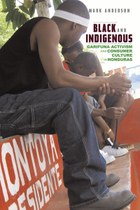
Garifuna live in Central America, primarily Honduras, and the United States. Identified as Black by others and by themselves, they also claim indigenous status and rights in Latin America. Examining this set of paradoxes, Mark Anderson shows how, on the one hand, Garifuna embrace discourses of tradition, roots, and a paradigm of ethnic political struggle. On the other hand, Garifuna often affirm blackness through assertions of African roots and affiliations with Blacks elsewhere, drawing particularly on popular images of U.S. blackness embodied by hip-hop music and culture.
Black and Indigenous explores the politics of race and culture among Garifuna in Honduras as a window into the active relations among multiculturalism, consumption, and neoliberalism in the Americas. Based on ethnographic work, Anderson questions perspectives that view indigeneity and blackness, nativist attachments and diasporic affiliations, as mutually exclusive paradigms of representation, being, and belonging.
As Anderson reveals, within contemporary struggles of race, ethnicity, and culture, indigeneity serves as a normative model for collective rights, while blackness confers a status of subaltern cosmopolitanism. Indigeneity and blackness, he concludes, operate as unstable, often ambivalent, and sometimes overlapping modes through which people both represent themselves and negotiate oppression.
Black and Indigenous is a challenging study that helps us interrogate our basic assumptions about categories such as indigenous and black, Diaspora and rooted, and tradition and modernity in radically innovative and freshly productive ways.
Bettina Ng’weno, author of Turf Wars: Territory and Citizenship in the Contemporary State
Black and Indigenous will make an important contribution to the growing literature on blackness and also indigenous identity in Latin America.
Peter Wade, author of Race, Nature and Culture: An Anthropological Approach
Ethnographically rich and theoretically sophisticated, this book adds a great deal of insight into the literature on race, racial identities, and ethnic politics.
The Americas
Black and Indigenous is a nuanced and important addition to the identities literature in Latin America. Anderson does justice to Sambenos and activists alike.
American Ethnologist
Anderson’s is a thorough, fascinating, theoretically astute and culturally informed assessment of the manifest tensions and dynamic contradictions inherent in Garifuna efforts to fashion individual and collective identities, continuously reshaping themselves in a postpostmodern world.
Journal of Latin American Studies
College students, professors, and non-specialists alike will benefit from reading this work.
Ethnohistory
In what is undoubtedly a valuable contribution to the literature, Anderson deftly captures the complex politics of race and culture among the Honduran Garifuna and their attempts to address their marginalisation by the majority population.
Bulletin of Latin American Research
Anderson has paved the way for what is required in the future.
Journal of Latin American and Caribbean Anthropology
Black and Indigenous: Garifuna Activism and Consumer Culture in Honduras is a significant contribution to the burgeoning literature on Afro and indigenous peoples in the Americas.
American Anthropologist