The Dream of Civilized Warfare
World War 1 Flying Aces and the American Imagination
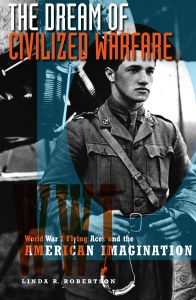
Traces the history of the American desire to exert the nation’s will without risking the lives of ground soldiers—a theme that reverberates today. Linda Robertson presents the compelling story of the creation of the first American air force—and how, through the propaganda of the flying ace, a vision of “clean” or civilized combat was sold to the public.
This is one of the few works to demonstrate that the fascination with air power, and the assumption that it was a major war-winning tool peculiarly adapted to the American temperament, industrial productive capacity, and international role, was present right at the moment of America’s emergence on the stage of world power in 1917.
Michael C. C. Adams, author of The Best War Ever: America and World War II
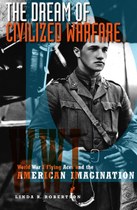
Linda R. Robertson argues that the development of the United States as a global military power arose from the influence of an image of air combat carefully constructed during World War I to mask the sordid realities of modern ground warfare. The Dream of Civilized Warfare carries this trajectory to its logical end, tracing the long history of the American desire to exert the nation’s will throughout the world without having to risk the lives of ground soldiers—a theme that continues to reverberate in public discussions, media portrayals, and policy decisions today.
Histories of American air power usually focus on World War II, when the air force became the foundation for the military strength of the United States. The equally fascinating story of World War I air combat is often relegated to a footnote, but it was the earlier war that first inspired the vision of the United States attaining dominance in world affairs through a massive air force. In The Dream of Civilized Warfare, Robertson presents the compelling story of the creation of the first American air force—and how, through the propaganda of the flying ace, a vision of “clean” or civilized combat was sold to politicians and the public.
During World War I, air combat came to epitomize American ingenuity, technological superiority, adventure, leadership, and teamwork. Robertson reveals how the romantic and chivalric imagery associated with flying aces was a product of intentional propaganda and popular culture. Examining aviation history, military battles, films, literature, and political events, she looks at how the American public’s imagination was shaped—how flying aces offered not only a symbol of warfare in stark contrast to the muddy, brutal world of the trenches, but also a distraction to an American public resistant to both intervention in a European conflict and the new practice of conscription.
This is one of the few works to demonstrate that the fascination with air power, and the assumption that it was a major war-winning tool peculiarly adapted to the American temperament, industrial productive capacity, and international role, was present right at the moment of America’s emergence on the stage of world power in 1917.
Michael C. C. Adams, author of The Best War Ever: America and World War II
A valuable and informing book.
Journal of American History
Extremely interesting, fresh, and well-done. Recommended.
Choice
In this extraordinary study, Robertson traces the American air service from its inception during World War I through the second Gulf conflict and reveals how the romanticized myth of the flying ace was used to sell the vision of ‘clean’ or civilized combat to receptive politicians and a gullible public. The author laments that the mythos surrounding these aerial adventurers has been adopted by the current Bush administration, which has readily accepted massive strategic bombing in Afghanistan and Iraq as the only option to military stalemate, culminating in President Bush’s decision to land on the aircraft carrier Abraham Lincoln dressed as a combat pilot. A highly controversial yet stimulating book that demands to be read.
Library Journal
The Dream of Civilized Warfare fills a crying need for an approach to the history of military aviation that acknowledges the forces of social and cultural history.
Military History
Robertson’s work is the rare examination of air power and its history and impact before World War II. Her portraits of either completely or partly forgotten heroes of the war, such as Rickenbacker, are very effective and original.
In Flight USA
Linda Robertson tackles the origins of the ‘myth’ of air power, specifically as it relates to the American experience in the First World War. An interesting, worthwhile read.
Relevance
Linda Robertson reiterates the major elements of these now standard arguments, but provides a fuller analysis, recasting them as a function of the relationship between the technology of the fighter airplane and the American society’s hopes for it. Well written and carefully thought out, Robertson’s book especially its first chapters, presents a convincing overview of the constructions involved in introducing a radically new weapon system to modern warfare. The Dream of Civilized Warfare provides an informative and innovative argument that should be of interest to historians in a variety of disciplines.
Technology and Culture
There is much of interest here, particularly for students concerned with the birth of the air service and with the significance of the representation and cultural history of the first war in the air.
American Historical Review