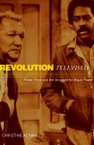
Revolutionaries to Race Leaders
Black Power and the Making of African American Politics
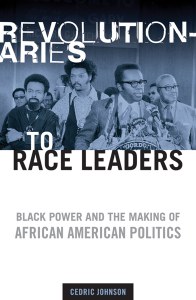
Exploring the major political and intellectual currents from the Black Power era to the present, Cedric Johnson reveals how black political life conformed to liberal democratic capitalism and how the movement’s most radical aims were eclipsed by more moderate aspirations. Documenting the historical retreat from democratic struggle, Revolutionaries to Race Leaders ultimately calls for the renewal of popular resistance and class-conscious politics.
Revolutionaries to Race Leaders is critical for understanding the roots and complex ideological dynamics that continue to shape contemporary black politics.
Adolph Reed Jr., University of Pennsylvania
The Black Power movement represented a key turning point in American politics. Disenchanted by the hollow progress of federal desegregation during the 1960s, many black citizens and leaders across the United States demanded meaningful self-determination. The popular movement they created was marked by a vigorous artistic renaissance, militant political action, and fierce ideological debate.
Exploring the major political and intellectual currents from the Black Power era to the present, Cedric Johnson reveals how black political life gradually conformed to liberal democratic capitalism and how the movement’s most radical aims-the rejection of white aesthetic standards, redefinition of black identity, solidarity with the Third World, and anticapitalist revolution-were gradually eclipsed by more moderate aspirations. Although Black Power activists transformed the face of American government, Johnson contends that the evolution of the movement as a form of ethnic politics restricted the struggle for social justice to the world of formal politics.
Johnson offers a compelling and theoretically sophisticated critique of the rhetoric and strategies that emerged in this period. Drawing on extensive archival research, he reinterprets the place of key intellectual figures, such as Harold Cruse and Amiri Baraka, and influential organizations, including the African Liberation Support Committee, the National Black Political Assembly, and the National Black Independent Political Party in postsegregation black politics, while at the same time identifying the contradictions of Black Power radicalism.
Documenting the historical retreat from radical, democratic struggle, Revolutionaries to Race Leaders ultimately calls for the renewal of popular struggle and class-conscious politics.
Awards
2008 W. E. B. Du Bois Outstanding Book Award from the National Conference of Black Political Scientists
Revolutionaries to Race Leaders is critical for understanding the roots and complex ideological dynamics that continue to shape contemporary black politics.
Adolph Reed Jr., University of Pennsylvania
An intriguing and certainly relevant account of how black radical politics morphed over more than two decades.
Journal of American Ethnic History
Revolutionaries to Race Leaders is a thought-provoking and challenging read. Johnson’s understanding of Marxist-Leninist ideology and its representation in the Black Power era and afterward is impressive, as is his retelling of the struggles to create powerful black political organizations and their larger social meaning to American society in the latter part of the twentieth century.
African American Review
Following Johnson’s careful intellectual history, we must ask what is lost in the turn toward “conventional politics.”
Callaloo
By the author from New Politics: "The American Left After Black Lives Matter"
By the author from Jacobin: "Black Political Life and the Blue Lives Matter Presidency"