Wiping the War Paint off the Lens
Native American Film and Video
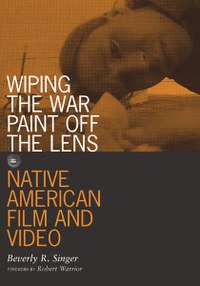
Native Americans have thrown themselves into filmmaking since the mid-1970s, producing hundreds of films and videos, and their body of work has had great impact on Native cultures and filmmaking itself. Wiping the War Paint off the Lens traces the history of Native experiences as subjects, actors, and creators, and develops a critical framework for approaching Native work. Singer positions Native media as part of a larger struggle for "cultural sovereignty"-the right to maintain and protect cultures and traditions.
Wiping the War Paint off the Lens recounts the history of Native American documentary and narrative film since the 1970s. Author and filmmaker Beverly R. Singer argues for the necessity of Native self-representation and its efforts to deal with a tragic past. Citing specific directors and producers, this volume serves as a resource guide to Native American film and a summary of its development.
Doubletake
Native Americans have thrown themselves into filmmaking since the mid-1970s, producing hundreds of films and videos, and their body of work has had great impact on Native cultures and filmmaking itself. With their cameras, they capture the lives of Native people, celebrating community, ancestral lifeways, and identity. Not only artistic statements, the films are archives that document rich and complex Native communities and counter mainstream media portrayals.
Wiping the War Paint off the Lens traces the history of Native experiences as subjects, actors, and creators, and develops a critical framework for approaching Native work. Singer positions Native media as part of a larger struggle for "cultural sovereignty"-the right to maintain and protect cultures and traditions. Taking it out of a European-American context, she reframes the discourse of filmmaking, exploring oral histories and ancient lifeways inform Native filmmaking and how it seeks to heal the devastation of the past. Singer’s approach is both cultural and personal, provides both historical views and close textual readings, and may well set the terms of the critical debate on Native filmmaking.
Wiping the War Paint off the Lens recounts the history of Native American documentary and narrative film since the 1970s. Author and filmmaker Beverly R. Singer argues for the necessity of Native self-representation and its efforts to deal with a tragic past. Citing specific directors and producers, this volume serves as a resource guide to Native American film and a summary of its development.
Doubletake
Contents
Foreword ROBERT WARRIOR
Prologue in Three Parts
Acknowledgments
Introduction: Thinking Indian Thoughts
1 > Bringing Home Film and Video Making
2 js» The War-Painted Years
3 J» Toward Independence
4 > Native Filmmakers, Programs, and Institutions
5 > On the Road to Smoke Signals
Conclusion: Continuing the Legacy
Notes
Index