Ulrike Ottinger
The Autobiography of Art Cinema
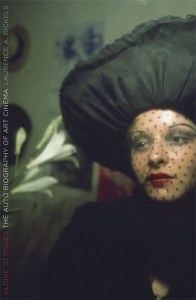
Laurence A. Rickels offers analyses of Ulrike Ottinger’s films, as well as her photographic artworks, situated within a dazzling thought experiment centered on the history of art cinema. In addition to commemorating the death of a once-vital art form, this book also affirms Ottinger’s defiantly optimistic turn toward the documentary film as a means of mediating present clashes between tradition and modernity, between the local and the global.
Whether perceived as a biography of an important filmmaker or the autobiography of cinema itself, Laurence A. Rickels's book is rich in detail, images, and vivid descriptions of Ulrike Ottinger's magical films. Ottinger seamlessly convenes imagination with reality in her unique style of storytelling, and it is this ease in combining forms, along with her adventurous curiosity, that cements her place in art cinema.
Sheryl Mousley, curator of film/video, Walker Art Center
Since 1974, German filmmaker Ulrike Ottinger has created a substantial body of films that explore a world of difference defined by the tension and transfer between settled and nomadic ways of life. In many of her films, including Exile Shanghai, an experimental documentary about the Jews of Shanghai, and Joan of Arc of Mongolia, in which passengers on the Trans-Siberian Express are abducted by Mongolian bandits, she also probes the encounter with the other, whether exotic or simply unpredictable.
In Ulrike Ottinger Laurence A. Rickels offers a series of sensitive and original analyses of Ottinger’s films, as well as her more recent photographic artworks, situated within a dazzling thought experiment centered on the history of art cinema through the turn of the twenty-first century. In addition to commemorating the death of a once-vital art form, this book also affirms Ottinger’s defiantly optimistic turn toward the documentary film as a means of mediating present clashes between tradition and modernity, between the local and the global.
Widely regarded as a singular and provocative talent, Ottinger’s conspicuous absence from critical discourse is, for Rickels, symptomatic of the art cinema’s demise. Incorporating interviews he conducted with Ottinger and illustrated with stunning examples from her photographic oeuvre, this book takes up the challenges posed by Ottinger’s filmography to interrogate, ultimately, the very practice—and possibility—of art cinema today.
Whether perceived as a biography of an important filmmaker or the autobiography of cinema itself, Laurence A. Rickels's book is rich in detail, images, and vivid descriptions of Ulrike Ottinger's magical films. Ottinger seamlessly convenes imagination with reality in her unique style of storytelling, and it is this ease in combining forms, along with her adventurous curiosity, that cements her place in art cinema.
Sheryl Mousley, curator of film/video, Walker Art Center
Irresistible.
Gay City News
This is a dazzling book. . . . Rickels has a wide-ranging command of cinema in all its varieties, and he writes rewardingly about literature and contemporary art. The ‘autobiography of art cinema’ plot makes for a compelling angle—Rickels has a provocative sense of what the art cinema is and does—but the heart of the book is a readable, sophisticated introduction to Ottinger’s artistic career.
Choice
A delightful and inspiring read.
German Studies Review
There are hardly words to describe [Ottinger’s] striking and innovative films, but Rickels’s ambitious new book—drawing upon extensive interviews with the filmmaker—provides compelling interpretations.
Guardian
Like all his previous volumes, Rickels’s monograph is indubitably an important scholarly first. Unlike the small handful of German publications and university theses, and unlike the few available Goethe Institute publications in Polish or museum catalogues in Spanish, Rickels’s is the first comprehensive academic study to introduce Ottinger’s filmic oeuvre once and for all to the wide audience it deserves and to bestow upon her films conceptually sophisticated readings that evince the rich diversity and evolution of her exilic perspective.
Monatshefte
A friend and collaborator of the filmmaker [Ulrike Ottinger], Rickels has an unusually close and rich view of the work.
German Quarterly