The Racial Order of Things
Cultural Imaginaries of the Post-Soul Era
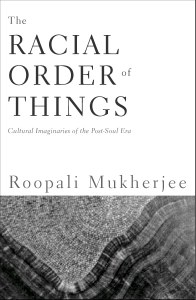
Roopali Mukherjee analyzes reversals and reinterpretations of affirmative action that mark the turn from the civil rights era of the sixties to the post-soul decade of the nineties. Balancing policy narrative, cinematic reading, and conceptual analysis, Mukherjee demonstrates a shifting and paradoxical racial order that explains how the cultural authority and political career of affirmative action remains in flux.
The Racial Order of Things is a very important analysis of the discourse of 'race' using affirmative action as the main hook. This may be the first book that truly offers a conversation between the analysis of public policy and cultural studies.
Vijay Prashad, author of The Karma of Brown Folk
Why did affirmative action programs implemented during the sixties and seventies suffer vicious assaults in the nineties? How were culturally resonant appeals to individualism and colorblindness turned around during the nineties to epitomize a “toxic system of quotas, preference, and set-asides”?
In The Racial Order of Things, Roopali Mukherjee analyzes reversals and reinterpretations that mark the turn from the civil rights era of the sixties to the post-soul decade of the nineties. She begins by surveying a series of intractable disagreements over race- and gender-based social justice that have played out over the past decade, framed by the 1996 passage of California’s Proposition 209 and the 2003 Supreme Court decision on admissions criteria at the University of Michigan. Examining political campaigns for and against affirmative action as well as films about dilemmas of gender and race in the mythic meritocracy, the book exposes a remarkable discursive tug-of-war over antidiscrimination policies during the nineties.
Highlighting the ways in which categories such as “blackness” and “women” have operated in these debates, Mukherjee sees the public policy process as a key site where cultural identities are formed, recognized, and discarded. Considering mainstream media, including Hollywood films like Disclosure, G.I. Jane, Courage under Fire, and The Contender, Mukherjee focuses on conflicts following the introduction of women and blacks into the workplace. She explores the politics of public memory about the civil rights era through the lens of feature film, documentary, and network news. Using newspaper articles and legislative records, Mukherjee provides a comparative reading of narratives and counternarratives of the debate surrounding the 1964 Civil Rights Act and anti–affirmative action campaigns of the neoliberal nineties.
Balancing policy narrative, cinematic reading, and conceptual analysis, Mukherjee demonstrates a shifting and paradoxical racial order that explains how the cultural authority and political career of affirmative action remains in flux, thoroughly contested, and contradictory.
The Racial Order of Things is a very important analysis of the discourse of 'race' using affirmative action as the main hook. This may be the first book that truly offers a conversation between the analysis of public policy and cultural studies.
Vijay Prashad, author of The Karma of Brown Folk
Roopali Mukherjee’s study of race, discourse, and public institutions is a thought-provoking addition to the field of critical race theory.
Discourse
A highly original and well researched study. The Racial Order of Things is poised to make a valuable contribution to analyses of public policy and the still evolving field of post-soul cultural studies.
African American Review
The Racial Order of Things is a vital contribution to the field of cultural studies. Mukherjee’s work suggests a promising research agenda and methodology for Foucauldian cultural studies, while offering important insights regarding the racialized and sexualized common senses that buttress neo-liberal policies and ideologies.
Cultural Studies