The People Have Never Stopped Dancing
Native American Modern Dance Histories
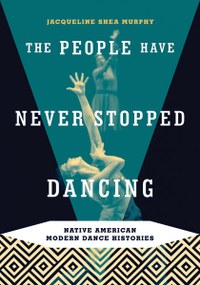
In this first major study of contemporary Native American dance, Jacqueline Shea Murphy shows how these concert performances are at once diverse and connected by common influences. Illustrating how Native dance enacts cultural connections to land, ancestors, and animals, as well as spiritual and political concerns, Shea Murphy challenges stereotypes and offers new ways of recognizing the agency of bodies on stage.
The People Have Never Stopped Dancing is a remarkable journey that celebrates the spirit and resistance of generations of Indigenous dancers and choreographers. As she witnesses and documents recent choreographic works, Jacqueline Shea Murphy reveals a continuum, where ancestral memories meet knowledge and imaginations, while stories of this generation ensure our future.
Marrie Mumford, Canada Research Chair, Aboriginal Arts and Literature, Trent University
During the past thirty years, Native American dance has emerged as a visible force on concert stages throughout North America. In this first major study of contemporary Native American dance, Jacqueline Shea Murphy shows how these performances are at once diverse and connected by common influences.
Demonstrating the complex relationship between Native and modern dance choreography, Shea Murphy delves first into U.S. and Canadian federal policies toward Native performance from the late nineteenth through the early twentieth centuries, revealing the ways in which government sought to curtail ceremonial dancing while actually encouraging staged spectacles, such as those in Buffalo Bill’s Wild West shows. She then engages the innovative work of Ted Shawn, Lester Horton, and Martha Graham, highlighting the influence of Native American dance on modern dance in the twentieth century. Shea Murphy moves on to discuss contemporary concert dance initiatives, including Canada’s Aboriginal Dance Program and the American Indian Dance Theatre.
Illustrating how Native dance enacts, rather than represents, cultural connections to land, ancestors, and animals, as well as spiritual and political concerns, Shea Murphy challenges stereotypes about American Indian dance and offers new ways of recognizing the agency of bodies on stage.
Awards
Winner of the 2008 de la Torre Bueno Prize for Outstanding Book of the Year.
The People Have Never Stopped Dancing is a remarkable journey that celebrates the spirit and resistance of generations of Indigenous dancers and choreographers. As she witnesses and documents recent choreographic works, Jacqueline Shea Murphy reveals a continuum, where ancestral memories meet knowledge and imaginations, while stories of this generation ensure our future.
Marrie Mumford, Canada Research Chair, Aboriginal Arts and Literature, Trent University
Jacqeline Shea Murphy has given us an intelligently written and enormously informative account of the creative survivability of American Indian dance within the turmoil and hardships of the past 100-plus years. Scholars and artists will relish the portraits of the creative artists and the dances they made and performed and are still making and performing. This is an excellent achievement in and contribution to American Indian arts scholarship.
Hanay Geiogamah, UCLA American Indian Studies
This major work is marked by fluid analysis and rigorous research.
Choice
As an ethnographer, I was especially moved by Shea Murphy’s rigorous self-positioning in her Introduction. She does not assume an entitlement to write about Native American dance, and candidly addresses the concerns of the Native dancers she meets and writes about when they confront her. She enacts here the responsibility that comes with knowing that we are never innocent of the histories and representational practices we document and analyze.
Theatre Survey
This text puts a whole new slant on the history of modern dance in America, and for this reason is a wonderful contribution to dance scholarship and essential reading.
The Drama Review
Fascinating, ambitious, and well researched.
Great Plains Quarterly
The People Have Never Stopped Dancing is an engaging and enlightening book about the relationship between Native dance and onstange modern dance in the United States and Canada. Beyond this specific focus, which itself fills and itself fills an important lacunae, this ambitious work advances our understanding of the many powerful ways in which performative practices, specifically dance, are the means by which human beings shape their society and history.
Dance Research Journal
Murphy does a fine job of challenging stereotypes about American Indian dance and offers the reader new ways to think about the agency of Native dancers’ bodies on stage.
Studies in American Indian Literatures