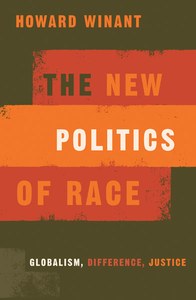
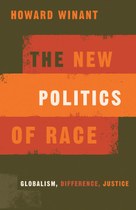
The New Politics of Race
Globalism, Difference, Justice
Howard Winant, one of the leading sociologists of race and ethnicity working today, clearly locates race at the crossroads of identity and social structure, where difference frames inequality. The New Politics of Race brings together Winant’s new and previously published essays to form a comprehensive picture of the origins and nature of the complex racial politics that engulf us today.
I recommend this book not only to people working in the area of race and ethnicity studies, but also to scholars interested in new social movements, women’s studies, environmental communication, and social protest studies who will find many interesting similarities between these antihegemonic campaigns and the themes and trends described by Winant.
Rhetoric and Public Affairs
It isn’t uncommon to hear now that race hardly matters anymore—that we’ve somehow gotten beyond it. In the face of such pronouncements, and the misconceptions that prompt them, this book aims to show precisely why and how race has always been, and remains, absolutely fundamental to modern politics. Howard Winant, one of the leading sociologists of race and ethnicity working today, clearly locates race at the crossroads of identity and social structure, where difference frames inequality and where political processes operate with a comprehensiveness that ranges from the world-historical to the intimately psychological.
The New Politics of Race brings together Winant’s new and previously published essays to form a comprehensive picture of the origins and nature of the complex racial politics that engulf us today. It is only in light of the post–World War II patterns of racial insurgency and reform that these politics can be understood, Winant asserts. His work offers a thorough grounding in these patterns, describing the breakdown of a certain racial order after World War II and identifying the ways in which racial hierarchies everywhere are being reestablished and reenergized, often in clandestine, or at least unfamiliar, forms.
Theoretically acute and empirically sound, his essays deftly analyze the character of racial formations in a world that is, on the surface, deeply committed to eradicating racism.
I recommend this book not only to people working in the area of race and ethnicity studies, but also to scholars interested in new social movements, women’s studies, environmental communication, and social protest studies who will find many interesting similarities between these antihegemonic campaigns and the themes and trends described by Winant.
Rhetoric and Public Affairs
Winant is one of few to theorize contemporary racial politics. The importance of his project is invaluable to the sociological race literature. This book serves as an important reminder that race has yet to be transcended, and seriously challenges the color-blindness of contemporary racial hegemony.
Canadian Journal of Sociology
Well-written and comprehensive essays on race.
MultiCultural Review
Contents
Introduction. The Racial Present: State, Society, Identity
Part I. U.S. Racial Politics
One Hundred Years of Racial Politics
Dialectics of the Veil
Racism Today: Continuity and Change in the Post-Civil Rights United States
Behind Blue Eyes: Contemporary White Racial Politics
Teaching Race and Racism in the Twenty-first Century
Part II. Comparative Racial Studies
Babylon System: The Continuity of Slavery
The Modern World Racial System
Reaching the Limits of Reform: Postapartheid South Africa and Post-Civil Rights United States
Durban, Globalization, and the World after 9/11: Toward a New Politics
The New Imperialism, Globalization, and Racism
Part III. Racial Theory
One Hundred Years of Racial Theory
Racial Dualism at Century's End
What Can Racial Theory Tell Us about Social Theory?
Conclusion: Racial Politics in the Twenty-first Century
Acknowledgments
Notes
Works Cited
Publication History
Index