The New Downtown Library
Designing with Communities
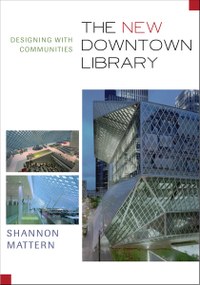
In The New Downtown Library, Shannon Mattern investigates how libraries serve as multi-use public spaces, anchors in urban redevelopment, civic icons, and showcases of renowned architects like Rem Koolhaas and Cesar Pelli. Mattern brings to light the social forces, as well as their architectural expressions, that form the essence of new libraries and their vital place in public life.
I've kept Shannon Mattern's superb book, The New Downtown Library, beside me for several years as an invaluable guide to all the wonders and travails associated with the great project of public library-building. It doesn't pull punches, it is erudite and filled with fine insights, and the writing is energetic and at times profound.
Ken Worpole, The Cities Institute, London Metropolitan University
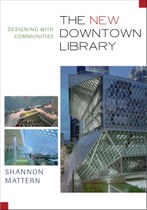
The past twenty years have seen a building boom for downtown public libraries. From Brooklyn to Seattle, architects, civic leaders, and citizens in major U.S. cities have worked to reassert the relevance of the central library. While the libraries’s primary functions—as public spaces where information is gathered, organized, preserved, and made available for use—have not changed over the years, the processes by which they accomplish these goals have. These new processes, and the public debates surrounding them, have radically influenced the utility and design of new library buildings.
In The New Downtown Library, Shannon Mattern draws on a diverse range of sources to investigate how libraries serve as multi-use public spaces, anchors in urban redevelopment, civic icons, and showcases of renowned architects like Rem Koolhaas, Cesar Pelli, and Enrique Norton. Mattern’s clear and careful analysis reveals the complexity of contemporary dialogues in library design, highlighting the roles that staff, the public, and other special interest groups play. Mattern also describes how the libraries manifest changing demographics, new ways of organizing collections and delivering media, and current philosophies of librarianship.
By identifying unifying themes as well as examining the differences among various design projects, Mattern brings to light the social forces, as well as their architectural expressions, that form the essence of new libraries and their vital place in public life.
Featured libraries are located in Brooklyn, Cincinnati, Cleveland, Chicago, Denver, Los Angeles, Minneapolis, Nashville, New York, Phoenix, Salt Lake City, San Antonio, San Francisco, Seattle, and Toledo.
I've kept Shannon Mattern's superb book, The New Downtown Library, beside me for several years as an invaluable guide to all the wonders and travails associated with the great project of public library-building. It doesn't pull punches, it is erudite and filled with fine insights, and the writing is energetic and at times profound.
Ken Worpole, The Cities Institute, London Metropolitan University
The New Downtown Library represents an important contribution to literature in the architecture field, but also has the potential to contribute greatly to the shaping of the future of library design. Based on impressive and original scholarship, it is an invaluable resource.
Ken Breisch, Director of Graduate Programs in Historic Preservation, University of Southern California
Shannon Mattern approaches her subject from a very welcome multidisciplinary background, thereby providing her readers with valuable perceptions and insights that are not easily available elsewhere. An excellent and thorough examination.
David Kaser, Distinguished Professor Emeritus of Library and Information Science, Indiana University
Mattern is very informative. The book is attractive enough to be a magnet to draw people to its pages.
Desert Morning News
A library is more than a collection of books—it is a social and cultural institution
that exerts a strong influence on the people it serves and the society in which
it operates. The New Downtown Library describes the part that libraries are called
upon to play in sustaining the intellectual, commercial, and social life of great
American cities, and examines the controversies that arise from the conflicting
demands placed on them. Shannon Mattern tells a very important story in a highly
readable way.
Fred Lerner, author of Libraries through the Ages and The Story of Libraries: From the Invention of Writing to the Computer Age
An academic look at the changing architecture of libraries.
Sara Pearce
CONTENTS
Preface
Acknowledgments
1. All Things to All People: The Public Library and Its Multiple Identities
2. A New Chapter: The Third Wave of Library Design
3. The Downtown Library, Urban Sprawl, and the Information Age
4. Form for Function: The Architecture of New Libraries
5. Reinventing the Public Square: Libraries and Nonmedia Programming
6. Open Stacks: Negotiating Space for Media
7. Away from the Desk: New Modes of Librarianship
Conclusion
Notes
Index
UMP blog - How do libraries keep up with their communities as their work changes with the times?
It was only a decade ago that America’s public libraries were still enjoying their “third wave” of major construction (the first boom was during the Carnegie era, and the second, at mid-century). High-profile architects were designing innovative library buildings for downtowns that were undergoing dramatic renewals. Throughout the 90s and early aughts, many libraries regarded their construction projects as opportunities to work through critical questions regarding their institution’s functions and identity: What role did these buildings play in their cities? What were their obligations to their multiple publics, and how could the building provide space to serve those publics’ needs, while also honoring the library’s obligations to its collections and infrastructure? How would libraries balance their provisions for both “old” media and “new”? How would they create buildings that are flexible, functional, and full of light – and that reflect their cities’ evolving identities?