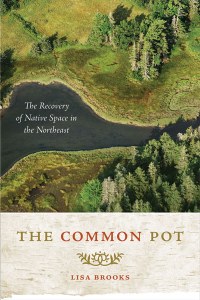
The Common Pot
The Recovery of Native Space in the Northeast
Illuminates the significance of writing to colonial-era Native American resistance
Lisa Brooks demonstrates the ways in which Native leaders—including Samson Occom, Joseph Brant, Hendrick Aupaumut, and William Apess—adopted writing as a tool to reclaim rights and land in the Native networks of what is now the northeastern United States.
She shows that writing was not a foreign technology but rather a crucial weapon in the Native Americans’ arsenal as they resisted—and today continue to oppose—colonial domination.
"Having had their writings published for centuries, New England’s Native Americans have bucked a dark stereotype, which predicates indigenous authenticity on illiteracy. Lisa Brooks bravely demonstrates that Native New England's literary heritage actually represents Good Medicine (in the most traditional Indian sense of the word). Taput ni / Thank You Lisa Brooks for showing the next generation of Native American writers that their path is true."—Melissa Tantaquidgeon Zobel, Mohegan Medicine Woman and Tribal Historian
Literary critics frequently portray early Native American writers either as individuals caught between two worlds or as subjects who, even as they defied the colonial world, struggled to exist within it. In striking counterpoint to these analyses, Lisa Brooks demonstrates the ways in which Native leaders—including Samson Occom, Joseph Brant, Hendrick Aupaumut, and William Apess—adopted writing as a tool to reclaim rights and land in the Native networks of what is now the northeastern United States.
“The Common Pot,” a metaphor that appears in Native writings during the eighteenth and nineteenth centuries, embodies land, community, and the shared space of sustenance among relations. Far from being corrupted by forms of writing introduced by European colonizers, Brooks contends, Native people frequently rejected the roles intended for them by their missionary teachers and used the skills they acquired to compose petitions, political tracts, and speeches; to record community councils and histories; and most important, to imagine collectively the routes through which the Common Pot could survive.
Reframing the historical landscape of the region, Brooks constructs a provocative new picture of Native space before and after colonization. By recovering and reexamining Algonquian and Iroquoian texts, she shows that writing was not a foreign technology but rather a crucial weapon in the Native Americans’ arsenal as they resisted—and today continue to oppose—colonial domination.
Having had their writings published for centuries, New England’s Native Americans have bucked a dark stereotype, which predicates indigenous authenticity on illiteracy. Lisa Brooks bravely demonstrates that Native New England's literary heritage actually represents Good Medicine (in the most traditional Indian sense of the word). Taput ni / Thank You Lisa Brooks for showing the next generation of Native American writers that their path is true.
Melissa Tantaquidgeon Zobel, Mohegan Medicine Woman and Tribal Historian
Reading Native lands and Native texts to recover Native history, Lisa Brooks has produced an innovative, insightful, and stimulating book that restores New England as Native space and adds a vital perspective to the written history of the region.
Colin G. Calloway, Dartmouth College
A strong, welcome entry in Native American studies.
Choice
If the Native writing Brooks uncovers does not achieve quite the revolutionary victories she claims, perhaps her own book—with its lively, impassioned, and poetic recovery of indigenous space—will be more successful, and we will all be the beneficiaries of such vibrant and expectant remappings.
Wicazo Sa Review
The Common Pot is an impressive first book that should radically change the way we think about early Native American writings from the Northeast.
Comparative Literature
Brooks’s emphasis on the importance of place-based history exemplifies an Indigenous approach to historical knowledge that is worthy of high praise.
Ethnohistory
Appealing to a wide range of readers, both general interest and academic, Brooks lends an alternate and moving interpretation of history that firmly places her within the post-colonial literary tradition.
Native Studies Review
A liberating and rewarding read.
Northeastern Geographer
A powerful and compelling statement about early Native American writing that will leave a lasting impression.
Early American Review