Shanghai and the Edges of Empires
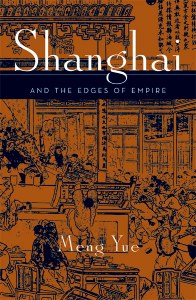
Shanghai and the Edges of Empires analyzes a century-long shift of urbanity from China's heartland to its shore. Simultaneously appropriating and resisting imposing forces, Shanghai opened itself to subversive practices, becoming a crucible of creativity and modernism. Meng Yue reveals the paradoxical interdependence between imperial and imperialist histories and the retranslation of culture that characterized the emergence of the city of Shanghai.
Never before has the Jianan area, with Shanghai as its emergent center, been shown in such multifaceted splendor. A weighty tome and a magnificent achievement in Chinese and comparative cultural history.
Leo Ou-fan Lee, Chinese University of Hong Kong
Even before the romanticized golden era of Shanghai in the 1930s, the famed Asian city was remarkable for its uniqueness and East-meets-West cosmopolitanism. Meng Yue analyzes a century-long shift of urbanity from China’s heartland to its shore. During the period between the decline of Jiangnan cities such as Suzhou and Yangzhou and Shanghai’s early twentieth-century rise, the overlapping cultural edges of a failing Chinese royal order and the encroachment of Western imperialists converged. Simultaneously appropriating and resisting imposing forces, Shanghai opened itself to unruly, subversive practices, becoming a crucible of creativity and modernism.
Calling into question conventional ways of conceptualizing modernity, colonialism, and intercultural relations, Meng Yue examines such cultural practices as the work of the commercial press, street theater, and literary arts, and shows that what appear to be minor cultural changes often signal the presence of larger political and economic developments. Engaging theories of modernity and postcolonial and global cultural studies, Meng Yue reveals the paradoxical interdependence between imperial and imperialist histories and the retranslation of culture that characterized the most notable result of China’s urban relocation-the emergence of the international city of Shanghai.
Never before has the Jianan area, with Shanghai as its emergent center, been shown in such multifaceted splendor. A weighty tome and a magnificent achievement in Chinese and comparative cultural history.
Leo Ou-fan Lee, Chinese University of Hong Kong
Meng Yue proposes a 'spatial history' that results in surprising and persuasive readings that explore the nature of Shanghai modernity and urban culture.
Ackbar Abbas
This ambitious work seeks to write a history that escapes the binary of capitalism versus Communist socialism. Meng has provides us with a new vocabulary, a sophisticated blend of literary and social theory, and an exhilarating set of new questions.
China Quarterly
Hers is an audacious, original, and highly imaginative study.
The Journal of Asian Studies