Race and Reconciliation
Essays from the New South Africa
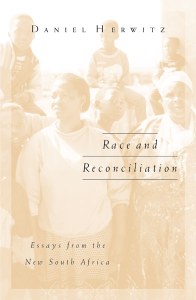
Seeking the timeless through the timely, Daniel Herwitz brings the vast resources of the philosophical essay to bear on the new realities of post-apartheid South Africa—from racial identity to truth commissions, from architecture to film and television. A public intellectual’s reflections on public life, Herwitz’s essays question how the new South Africa has constructed its concepts of reconciliation and return.
This book offers a fresh eye on the evolving situation in South Africa, for the first time providing embedded philosophical explanations of the multiple dilemmas facing postapartheid South Africa.
Peter Vale, author of Security and Politics in South Africa
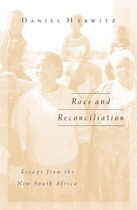
Justice, truth, and identity; race, society, and law—all come into dramatic play as South Africa makes the tumultuous transition to a post-apartheid democracy. Seeking the timeless through the timely and trying to find the deeper meaning in the sweep of events, Daniel Herwitz brings the vast resources of the philosophical essay to bear on the new realities of post-apartheid South Africa—from racial identity to truth commissions, from architecture to film and television.
A public intellectual’s reflections on public life, Herwitz’s essays question how the new South Africa has constructed its concepts of reconciliation and return and how its historical emergence has meant a rethinking, reimagining, reexperiencing, relabeling, and repoliticizing of race. Herwitz’s purpose is to give a philosophical reading of society—a society already relying on implicitly philosophical concepts in its social and political agendas. Working through these concepts, testing their relevance for reading society, his book itself becomes a part of the politics of definition and description in the new South Africa.
This book offers a fresh eye on the evolving situation in South Africa, for the first time providing embedded philosophical explanations of the multiple dilemmas facing postapartheid South Africa.
Peter Vale, author of Security and Politics in South Africa
Contents
Acknowledgments
Introduction
1 The Coat of Many Colors: Truth and Reconciliation
2 Soweto’s Taxi, America’s Rib
3 Afro-Medici: Thabo Mbeki’s African Renaissance
4 Racial and Nonracial States and Estates
5 The Genealogy of Modern South African Architecture
6 Postmodernists of the South
7 Ongoing Struggle at the End of History
Notes
Index