Proust and Signs
The Complete Text
Gilles Deleuze
Translated by Richard Howard
The essential work on Proust
In a remarkable instance of literary and philosophical interpretation, the incomparable Gilles Deleuze reads Proust’s work as a narrative of an apprenticeship of a man of letters. Deleuze traces the network of signs laid by Proust (those of love, art, or worldliness) and moves toward an aesthetics that culminates in a meditation on the literary work as a sign-producing “machine”—an operation that reveals the superiority of “signs of art” in a world of signs.
Deleuze conducts readers on a corollary search that leads to a new and deeper understanding of the network of signs laid down by Proust.
Translation Review
In a remarkable instance of literary and philosophical interpretation, the incomparable Gilles Deleuze reads Marcel Proust’s work as a narrative of an apprenticeship—more precisely, the apprenticeship of a man of letters. Considering the search to be one directed by an experience of signs, in which the protagonist learns to interpret and decode the kinds and types of symbols that surround him, Deleuze conducts us on a corollary search—one that leads to a new understanding of the signs that constitute A la recherche du temps perdu.
In Richard Howard’s graceful translation, augmented with an essay that Deleuze added to a later French edition, Proust and Signs is the complete English version of this work. Admired as an imaginative and innovative study of Proust and as one of Deleuze’s more accessible works, Proust and Signs stands as the writer’s most sustained attempt to understand and explain the work of art.
$20.00 paper ISBN 978-0-8166-3258-9
208 pages, 4.75 X 7.5, 2003
Gilles Deleuze (1925–1995) was professor of philosophy at the University of Paris, Vincennes–St. Denis. With Félix Guattari, he coauthored Anti-Oedipus (1983) and A Thousand Plateaus (1987). Among his other works are Cinema 1 (1986), Cinema 2 (1989), Foucault (1988), The Fold (1992), Essays Critical and Clinical (1997), and Francis Bacon (2003), all published by the University of Minnesota Press.
Richard Howard has received the American Book Award and the PEN Translation Medal. He teaches in the School of the Arts at Columbia University.
Deleuze conducts readers on a corollary search that leads to a new and deeper understanding of the network of signs laid down by Proust.
Translation Review
This isn’t a new book. The French original was published in 1964 and in English eight years later. But don’t dismiss it as out-of-date. Like the book it analyses, Marcel Proust’s In Search of Lost Time, it pitches the reader into the future with a rare vigor. Deleuze’s book reveals the various ways Proust’s novel can help the reader with everyday life. Deleuze sees the presence of the novel as the thing itself; the essential achievement. Right from the start, Deleuze insists that the novel is not about memory, as is commonly assumed, but signs. It is Proust’s feat to reveal the process by which these signs work and how we might discern the truth of our lives from them.
Spike Magazine
About This Book
Related Publications
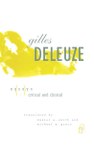
Francis Bacon
The Logic of Sensation
A publishing event—the last major work of Gilles Deleuze to be translated into English
Sedaris
An engaging and essential introduction to the work of America’s preeminent satirist, David Sedaris
Anti-Oedipus
Capitalism and Schizophrenia
The authors combine elements of the work of Marx, Freud, and Nietzsche to develop a political analysis of desire as it is repressed or expressed in Western culture.
The Fold
Leibniz and the Baroque
In The Fold, Gilles Deleuze argues that Leibniz’s writings constitute the grounding elements of a Baroque philosophy and of theories for analyzing contemporary arts and science. A model for expression in contemporary aesthetics, the concept of the monad is viewed in terms of folds of space, movement, and time. Similarly, the world is interpreted as a body of infinite folds and surfaces that twist and weave through compressed time and space. According to Deleuze, Leibniz also anticipates contemporary views of event and history as multifaceted combinations of signs in motion and of the “modern” subject as nomadic, always in the process of becoming.
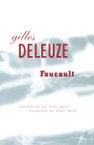
Foucault
The first analysis of Foucault’s work by a major philosopher working within the same poststructuralist tradition.
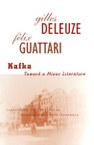
Kafka
Toward a Minor Literature
Instead of interpreting Kafka’s work according to pre-existing categories or literary genres, they propose a concept of “minor literature”—the use of a major language that subverts it from within.
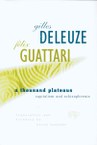
A Thousand Plateaus
Capitalism and Schizophrenia
A positive exercise in the affirmative, “nomad” thought called for in its companion volume, Anti-Oedipus. This series of essays address war and death, territoriality and the anthropology of groups, model theory, and psychosis.