Morgan Park
Duluth, U.S. Steel, and the Forging of a Company Town
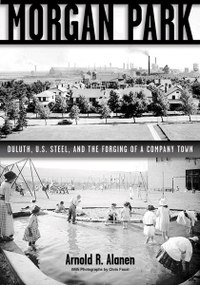
Starting with the intense political debates that preceded U.S. Steel’s decision to build a plant in Duluth, Morgan Park follows the company town and its residents through the boom years to the closing of the outmoded facility—an event that foreshadowed industrial shutdowns elsewhere in the United States—and up to today, as current residents work to preserve the community’s historic character.
Arnold Alanen has provided a rich account of the origins and fortunes of the company town Morgan Park, which is integral to Minnesota’s history.
John Archer, author of Architecture and Suburbia

From 1915 to 1971 the large U.S. Steel plant was a major part of Duluth’s landscape and life. Just as important was Morgan Park—an innovatively planned and close-knit community constructed for the plant’s employees and their families. In this book Arnold R. Alanen presents vivid portraits of Morgan Park, the formerly company-controlled town that now stands as a city neighborhood, and the U.S. Steel plant for which it was built.
Planned by renowned landscape architects, architects, and engineers, and provided with schools, churches, and recreational and medical services by U.S. Steel, Morgan Park is an iconic example—like Lowell, Massachusetts, and Pullman, Illinois—of a twentieth-century company town, as well as a window into northeastern Minnesota’s industrial roots.
Starting with the intense political debates that preceded U.S. Steel’s decision to build a plant in Duluth, Morgan Park follows the town and its residents through the boom years to the closing of the outmoded facility—an event that foreshadowed industrial shutdowns elsewhere in the United States—and up to today, as current residents work to preserve the community’s historic character.
Through compelling archival and contemporary photographs and vibrant stories of a community built of concrete and strong as steel, Alanen shows the impact both the plant and Morgan Park have had on Duluth.
Arnold Alanen has provided a rich account of the origins and fortunes of the company town Morgan Park, which is integral to Minnesota’s history.
John Archer, author of Architecture and Suburbia
Morgan Park is an important and historical documentary on the uniquely planned company town. The goals, accomplishments, and lessons learned are essential in today’s master planning of livable communities.
David Salmela, FAIA
Even readers with little interest in Duluth history will find Morgan Park an absorbing look at how a great American company provided for its workers, back in the day; how civic values were reflected in the design of model towns; and how, over time, those vales a dreams tend to degrade and must be rediscovered.
Rochester Post-Bulletin
Morgan Park is both academically rich and highly accessible for a designer audience. Alanen has unearthed fascinating political, architectural, and personal stories about the history and endurance of this company town.
Architecture Minnesota
Alanen writes in an easy style and never gets bogged down in academic jargon. There are lots of interesting historic pictures of the community through the years, as well as contemporary photos by St. Paulite Chris Faust.
Pioneer Press
Morgan Park is a well-researched study of a company town from the perspective of a landscape architect. Alanen’s extensive use of illustrations is much appreciated.
Labor Studies Journal
The book is well-written, broad in scope, and particularly well-illustrated with historic photographs, site plans, and architectural drawings.
Technology and Culture
The broad scope and careful detail that Alanen brings together in this document is a delight to discover.
Minnesota History