Limiting Secularism
The Ethics of Coexistence in Indian Literature and Film
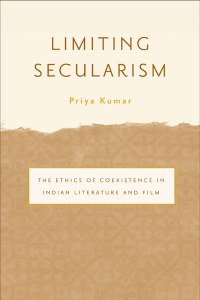
Limiting Secularism probes the urgent topic of secularism and tolerance in Indian culture and life. Priya Kumar unpacks the implications of the Nehruvian doctrine of tolerance—with all of its resonances of condescension and inequality—and asks whether more ethical cohabitation can replace the “arrogant compulsive tolerance” of the state and the majority. Kumar envisions the radical possibilities of going beyond tolerance to living well together.
Priya Kumar’s cogent and theoretically sophisticated comparative readings of South Asian literary texts and films make a significant contribution to contemporary cultural engagements with religion, cosmopolitanism, secularism, and ethics.
Sangeeta Ray, author of En-Gendering India
With a backdrop of religious violence and escalating regional tensions in South Asia, Priya Kumar’s Limiting Secularism probes the urgent topic of secularism and tolerance in Indian culture and life. Kumar explores Partition as the founding trauma of the Indian nation-state and traces the consequences of its marking off of “Indian” from “Pakistani” and the positioning of Indian Muslims as strangers within the nation.
Kumar unpacks the implications of the Nehruvian doctrine of tolerance—with all of its resonances of condescension and inequality—and asks whether more ethical cohabitation can replace the “arrogant compulsive tolerance” of the state and the majority. Informed by Jacques Derrida’s recent work on hospitality and living together, Kumar argues for the emergence of an “ethics of coexistence” in Indian fiction and film. Considering narratives ranging from the cosmopolitan English novels of Rushdie and Ghosh to literature in South Asian languages as well as recent Hindi cinema, Kumar demonstrates that these fictions are important resources for reimagining tolerance and coexistence.
Distinctive and timely in its investigation of secularism and communalism, Limiting Secularism works to envision the radical possibilities of going beyond tolerance to living well together.
Priya Kumar’s cogent and theoretically sophisticated comparative readings of South Asian literary texts and films make a significant contribution to contemporary cultural engagements with religion, cosmopolitanism, secularism, and ethics.
Sangeeta Ray, author of En-Gendering India
Limiting Secularism is a book for our times. While scrupulously specific to the context of post-Independence India, its provocations resonate well beyond the boundaries of the unique nation-space. Intellectual work at such a level of challenge and commitment does nothing less than open the doors of the mind.
Rajeswari Sunder Rajan, co-editor of Crisis of Secularism in India
Kumar’s book combines thoughtful analysis of literary texts and films and a sophisticated theoretical engagement with the debates about secularism in the Indian context. This book will be of interest not just to film and literary scholars but also to those who are interested in debates about the ethics of multiculturalism and religious coexistence.
Journal of Asian Studies