Latin Americanism
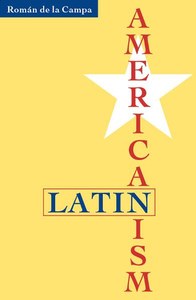
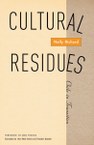
In this timely book, Román de la Campa asks to what degree the Latin America studied in U.S. academies is actually an entity “made in the U.S.A.” He argues that there is an ever-increasing gap between the political, theoretical, and financial pressures affecting the U.S. academy and Latin America’s own cultural, political, and literary practices, and considers what this new Latin Americanism has to say about the claims of poststructuralism, postmodern theory, and deconstruction.
This is an impressive and valuable book that thoughtfully diagnoses current paradigm shifts in the study of Latin American literature and culture, significantly advancing the crucial dialogue on how postcolonial and postmodern approaches bear on the Americas. Drawing on a huge breadth of reading, these essays are indispensable for scholars engaged in Latin American cultural studies.
Mary Louise Pratt, Olive H. Palmer Professor of Humanities, Stanford University
In this timely book, Román de la Campa asks to what degree the Latin America studied in U.S. academies is actually an entity “made in the U.S.A.” He argues that there is an ever-increasing gap between the political, theoretical, and financial pressures affecting the U.S. academy and Latin America’s own cultural, political, and literary practices, and considers what this new Latin Americanism has to say about the claims of poststructuralism, postmodern theory, and deconstruction.
De la Campa focuses on the conduct of Latin American literary criticism in U.S. universities and compares this with the “Latin Americanism” of Latin America itself. He examines the translation of Latin American works into English, the careerism of U.S. intellectuals, the conduct of Latin American literary criticism in English, and the diaspora of Third World intellectuals. In a reconsideration of the vogue in Latin American literature and magical realism in light of new work by theorists residing in Latin America, he contrasts this work with critiques of Latin American discourses in the United States.
A critique of postmodern and postcolonial constructions as articulated differently in the United States and Latin America, this hard-hitting but fair-minded book provides a postdeconstructive perspective on culture and literature.
ISBN 0-8166-3116-6 Cloth £00.00 $47.95xx
ISBN 0-8166-3117-4 Paper £00.00 $18.95x
224 Pages 5 7/8 x 9 June
Cultural Studies of the Americas Series, volume 3
Translation inquiries: University of Minnesota Press
This is an impressive and valuable book that thoughtfully diagnoses current paradigm shifts in the study of Latin American literature and culture, significantly advancing the crucial dialogue on how postcolonial and postmodern approaches bear on the Americas. Drawing on a huge breadth of reading, these essays are indispensable for scholars engaged in Latin American cultural studies.
Mary Louise Pratt, Olive H. Palmer Professor of Humanities, Stanford University
On the model of Edward Said's taxonomy of Orientalism, the idea of Latinamericanism has come into currency in recent years. It intends to designate the ideological and epistemological problematic involved in the representation of a Latin American ‘other’ through the theoretical-critical apparatus of the North American academy and the field of Latin American studies in particular. Román de la Campa's new book is the first systematic attempt to map cognitively the contradictions, contingencies, impasses, and possibilities that the operation of Latinamericanism as what Foucault would call a discursive formation entails. As such, it is indispensable reading for everyone involved in Latin American studies and postcolonial studies.
John Beverley, University of Pittsburgh
De la Campa offers a fascinating overview of Latin American literature from an activist perspective. De la Campa includes fascinating, original readings on the intersection of ‘native’ figures from Latin American societies, such as Sandino and Che Guevara, along with distinguished writers such as Borges and Cort-zar. A highly sophisticated reading of key Latin American literary and political figures. Highly recommended.
Choice
De la Campa investigates Latin American writers and theorists whose text-acts reach beyond their formal boundaries to transform their everyday reality.
Latin American Research Review
An insistent and intelligent study.
Centro
Contents
Preface
Acknowledgments
1. Latin Americanism and the Turns beyond Modernity
2. Postmodernism and Revolution: Borges, Che, and Other Slippages
3. Of Border Artists and Transculturation: Toward a Politics of Transmodern Performances
4. Mimicry and the Uncanny in Caribbean Discourse
5. The Lettered City: Power and Writing in Latin America
6. Globalization, Neoliberalism, and Cultural Studies
Notes
Bibliography
Index