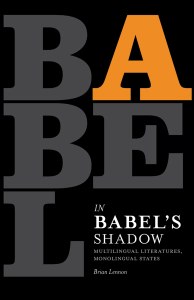
In Babel's Shadow
Multilingual Literatures, Monolingual States
Beginning with the insight that multilingual literature defies simple translation, Brian Lennon examines the resistance multilingual literature offers to book publication. Looking closely at the limit of multilingual literary expression and the literary journalism, criticism, and scholarship that comments on multilingual work, In Babel’s Shadow presents a critical reflection on the fate of literature in a world gripped by the crisis of globalization.
In Babel’s Shadow is at once an important contribution to translation studies, a pointed intervention in current debates on world literature, and a searching meditation on the politics of literary study today. Through incisive readings of a wide range of multilingual writers and critics, Brian Lennon brilliantly unfolds the challenges that ‘strong plurilingualism’ poses to readers, publishers, and critics alike. In Babel’s Shadow will make sobering—and inspiring—reading for anyone interested in the politics of literature in a multilingual world.
David Damrosch, Harvard University
Multilingual literature defies simple translation. Beginning with this insight, Brian Lennon examines the resistance multilingual literature offers to book publication itself. In readings of G. V. Desani’s All about H. Hatterr, Anthony Burgess’s A Clockwork Orange, Christine Brooke-Rose’s Between, Eva Hoffman’s Lost in Translation, Emine Sevgi Özdamar’s Mutterzunge, and Orhan Pamuk’s Istanbul, among other works, Lennon shows how nationalized literary print culture inverts the values of a transnational age, reminding us that works of literature are, above all, objects in motion.
Looking closely at the limit of both multilingual literary expression and the literary journalism, criticism, and scholarship that comments on multilingual work, In Babel’s Shadow presents a critical reflection on the fate of literature in a world gripped by the crisis of globalization.
In Babel’s Shadow is at once an important contribution to translation studies, a pointed intervention in current debates on world literature, and a searching meditation on the politics of literary study today. Through incisive readings of a wide range of multilingual writers and critics, Brian Lennon brilliantly unfolds the challenges that ‘strong plurilingualism’ poses to readers, publishers, and critics alike. In Babel’s Shadow will make sobering—and inspiring—reading for anyone interested in the politics of literature in a multilingual world.
David Damrosch, Harvard University
In Babel’s Shadow is an ambitious, sophisticated book that addresses crucial, timely issues in the study of life-writing, translation, translingualism, literary theory, and linguistics. Its range is extensive and its erudition and intellectual calisthenics dazzling.
Steven Kellman, author of The Translingual Imagination
In Babel’s Shadow is an intricate and sophisticated book on the liminal position of multilingual literature... in the book market and the academy. In Babel’s Shadow is a fascinating and very readable book for anyone thinking about translation, comparative literature and the future of multilingual texts.
Translation Studies