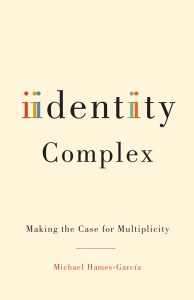
Identity Complex
Making the Case for Multiplicity
Grounded in both theoretical and political practices—in the lived realities of people’s experience—Identity Complex reinvigorates identity as a key concept and as a tool for the pursuit of social justice. Michael Hames-García draws on a wide range of examples to show that social identities are central to how exploitation works.
Identity Complex is a brilliantly argued, much needed intervention that redefines the terms and changes the stakes of the contemporary debate over identity politics. Michael Hames-García's transformative understanding of identity formations establishes his standing as the foremost scholar in the field.
Donald Pease, Dartmouth College
In seemingly exhaustive arguments about identity as a category of analysis, we have made a critical error—one that Michael Hames-García sets out to correct in this revisionary look at the making and meaning of social identities. We have asked how separate identities—of race, class, ethnicity, gender, and sexuality—come to intersect. Instead, Hames-García proposes, we should begin by understanding such social identities as mutually constituting one another.
Grounded in both theoretical and political practices—in the lived realities of people’s experience—Identity Complex reinvigorates identity as a key concept and as a tool for the pursuit of social justice. Hames-García draws on a wide range of examples to show that social identities are central to how exploitation works, such as debates about the desirability of sexual minority identities in postcolonial contexts, questions about the reality of race, and the nature of the U.S. prison crisis.
Unless we understand precisely how identities take shape in relation to each other and within contexts of oppression, he contends, we will never be able to eradicate discrimination and social inequality. By analyzing the social interdependence of identities, Hames-García seeks to enable the creation of deep connections of solidarity across differences.
Identity Complex is a brilliantly argued, much needed intervention that redefines the terms and changes the stakes of the contemporary debate over identity politics. Michael Hames-García's transformative understanding of identity formations establishes his standing as the foremost scholar in the field.
Donald Pease, Dartmouth College
In this important book, Michael Hames-Garcia presents a compelling argument that social identities are indispensable. Through vivid literary and political examples, the book brilliantly demonstrates the centrality of social identities to individuals’ lived experience and to our political and social reality. Hames-Garcia’s ability to tie theoretical issues to the real problems of multiple oppressions that exist in prisons and elsewhere substantially enriches the debate on social identity.
Hypatia
A thoughtful, philosophically inflected investigation into a range of identity-rich scenarios.
Western American Literature
Contents
Preface
1. Who Are Our Own People?
2. How Real Is Race?
3. Are Sexual Identities Desirable?
4. Do Prisons Make Better Men?
Conclusion: Reflections on Identity in the Obama Era
Acknowledgments
Notes
Bibliography
Index