Homeless Mothers
Face to Face with Women and Poverty
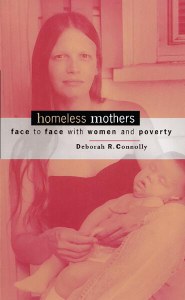
A first-person look at the challenges and cultural perceptions confronting homeless women. Both an anthropologist in the field and a social worker on the job, Deborah R. Connolly is ideally placed to draw out homeless women’s life stories, the stories that our culture tells about them, and the revealing contradictions between the two.
Homeless Mothers follows the daily lives and struggles of a small group of women in the pacific northwest as they negotiate violence, addiction, poverty, fractured familial ties, and an overrun social service system, constrained in terms not only of funds and staff, but also the explanatory models it brings to bear in assessing and assisting its primarily female clients and their children. From the finely crafted account Connolly offers of her work as a social service provider in a small non-profit community center, a rich and complicated set of portraits emerge of the suffering and survival of women situated on the material and ideological margins of social life. These portraits challenge the crude political depictions of such women that accompanied the call for welfare reform during the 1990s and provide a compelling foundation for reevaluating the ways in which homelessness is culturally understood and addressed. A theoretically smart and politically provocative study.
Valerie Hartouni, author of Cultural Conceptions
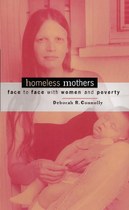
Homeless Mothers follows the lives of mothers on the margins and asks where they fit in the increasingly black-and-white model of motherhood set up by society. Their voices, so rarely heard and so often ignored, resonate throughout this book. Both an anthropologist in the field and a social worker on the job, Deborah R. Connolly is ideally placed to draw out these women’s life stories. Using their own words, by turns eloquent and awkward, poignant and harsh, she maps the perilous territory between the promise of childhood and the hard reality of motherhood on the street. What emerges is a glimpse of the cultural, class, gender, and economic challenges these women experience, a glimpse as real for us as the headlines and stereotypes that so often displace homeless mothers and consign them to silence.
Homeless Mothers follows the daily lives and struggles of a small group of women in the pacific northwest as they negotiate violence, addiction, poverty, fractured familial ties, and an overrun social service system, constrained in terms not only of funds and staff, but also the explanatory models it brings to bear in assessing and assisting its primarily female clients and their children. From the finely crafted account Connolly offers of her work as a social service provider in a small non-profit community center, a rich and complicated set of portraits emerge of the suffering and survival of women situated on the material and ideological margins of social life. These portraits challenge the crude political depictions of such women that accompanied the call for welfare reform during the 1990s and provide a compelling foundation for reevaluating the ways in which homelessness is culturally understood and addressed. A theoretically smart and politically provocative study.
Valerie Hartouni, author of Cultural Conceptions
Connolly sheds light on the impressive obstacles that homeless mothers regularly face.
Choice
Connolly explores in rich detail the day-to-day experiences of women who use family shelters. Homeless Mothers is an insider’s view on poverty and homelessness from the standpoint of mothers, families, and the social service providers who work with them. Connolly uses ethnographic methods and skills worthy of a good fiction writer to portray the daily lives, struggles, and intricate negotiations of homeless mothers.
Housing Studies