Capturing the Criminal Image
From Mug Shot to Surveillance Society
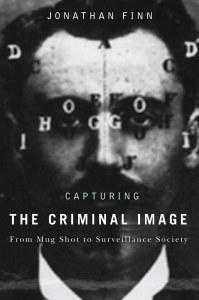
Capturing the Criminal Image traces how the act of representing—and watching—is central to modern law enforcement. Jonathan Finn analyzes the development of police photography in the nineteenth century to foreground a critique of three identification practices that are fundamental to current police work: fingerprinting, DNA analysis, and surveillance programs and databases.
Capturing the Criminal Image represents a significant contribution to the history of photographic representation—an area of special import in our increasingly image-constructed world.
Patricia Vettel-Becker, Montana State University-Billings
At the beginning of the twentieth century, criminals, both alleged and convicted, were routinely photographed and fingerprinted—and these visual representations of their criminal nature were archived for possible future use. At the beginning of the twenty-first century, a plethora of new tools—biometrics, DNA analysis, digital imagery, and computer databases—similarly provide new ways for representing the criminal.
Capturing the Criminal Image traces how the act of representing—and watching—is central to modern law enforcement. Jonathan Finn analyzes the development of police photography in the nineteenth century to foreground a critique of three identification practices that are fundamental to current police work: fingerprinting, DNA analysis, and surveillance programs and databases. He shows these practices at work by examining specific police and border-security programs, including several that were established by the U.S. government after the terrorist attacks of September 11, 2001. Contemporary law enforcement practices, he argues, position the body as something that is potentially criminal.
As Finn reveals, the collection and archiving of identification data—which consist today of much more than photographs or fingerprints—reflect a reconceptualization of the body itself. And once archived, identification data can be interpreted and reinterpreted according to highly mutable and sometimes dubious conceptions of crime and criminality.
Capturing the Criminal Image represents a significant contribution to the history of photographic representation—an area of special import in our increasingly image-constructed world.
Patricia Vettel-Becker, Montana State University-Billings
Jonathan Finn’s book is a well-informed and very clearly written contribution to the study of surveillance society and, more in general, the problem of visual knowledge. It helps to bridge the gap between several domains and various types of research that are gathered and combined here in a very efficient and innovative way.
Leonardo