Afterimages of Gilles Deleuze’s Film Philosophy
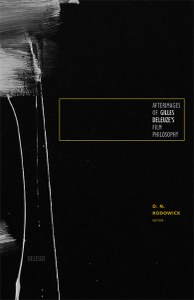
The first new collection of critical studies on Deleuze’s cinema writings in nearly a decade, Afterimages of Gilles Deleuze’s Film Philosophy provides original essays that evaluate the continuing significance of Deleuze’s film theories, accounting systematically for the ways in which they have influenced the investigation of contemporary visual culture and offering new directions for research.
Contributors: Raymond Bellour, Centre Nationale de Recherches Scientifiques; Ronald Bogue, U of Georgia; Giuliana Bruno, Harvard U; Ian Buchanan, Cardiff U; James K. Chandler, U of Chicago; Tom Conley, Harvard U; Amy Herzog, CUNY; András Bálint Kovács, Eötvös Loránd U; Patricia MacCormack, Anglia Ruskin U; Timothy Murray, Cornell U; Dorothea Olkowski, U of Colorado; John Rajchman, Columbia U; Marie-Claire Ropars-Wuilleumier, U Paris VIII; Garrett Stewart, U of Iowa; Damian Sutton, Glasgow School of Art; Melinda Szaloky, UC Santa Barbara
This anthology is a masterpiece of both selection and execution.
Choice
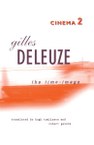
The French philosopher Gilles Deleuze was one of the most innovative and revolutionary thinkers of the twentieth century. Author of more than twenty books on literature, music, and the visual arts, Deleuze published the first volume of his two-volume study of film, Cinema 1: The Movement-Image, in 1983 and the second volume, Cinema 2: The Time-Image, in 1985. Since their publication, these books have had a profound impact on the study of film and philosophy. Film, media, and cultural studies scholars still grapple today with how they can most productively incorporate Deleuze’s thought.
The first new collection of critical studies on Deleuze’s cinema writings in nearly a decade, Afterimages of Gilles Deleuze’s Film Philosophy provides original essays that evaluate the continuing significance of Deleuze’s film theories, accounting systematically for the ways in which they have influenced the investigation of contemporary visual culture and offering new directions for research.
Contributors: Raymond Bellour, Centre Nationale de Recherches Scientifiques; Ronald Bogue, U of Georgia; Giuliana Bruno, Harvard U; Ian Buchanan, Cardiff U; James K. Chandler, U of Chicago; Tom Conley, Harvard U; Amy Herzog, CUNY; András Bálint Kovács, Eötvös Loránd U; Patricia MacCormack, Anglia Ruskin U; Timothy Murray, Cornell U; Dorothea Olkowski, U of Colorado; John Rajchman, Columbia U; Marie-Claire Ropars-Wuilleumier, U Paris VIII; Garrett Stewart, U of Iowa; Damian Sutton, Glasgow School of Art; Melinda Szaloky, UC Santa Barbara.
This anthology is a masterpiece of both selection and execution.
Choice