The Great Starvation Experiment
Ancel Keys and the Men Who Starved for Science
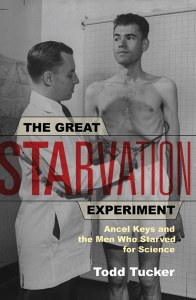
Near the end of World War II, thirty-six conscientious objectors volunteered to be systematically starved for renowned scientist Ancel Keys’s study at the University of Minnesota. Aimed to benefit relief efforts in war-ravaged Europe and Asia, the study sought the best way to rehabilitate starving citizens. Tucker captures a time when staunch idealism and a deep willingness to sacrifice trumped even basic human needs.
In 1943, 36 healthy young men, conscientious objectors all, agreed to participate in a yearlong experiment aimed at helping the anticipated starving populations of Europe. Much useful background on conscientious objection, alternative service, and the Peace Churches movement is included. A valuable addition to collections on the war, peace movements, and nutrition.
Library Journal
Near the end of World War II, thirty-six conscientious objectors volunteered to be systematically starved for renowned scientist Ancel Keys’s study at the University of Minnesota in the basement of Memorial Stadium. Aimed to benefit relief efforts in war-ravaged Europe and Asia, the study sought the best way to rehabilitate starving citizens. Tucker captures a lost moment in American history—a time when staunch idealism and a deep willingness to sacrifice trumped even basic human needs.
In 1943, 36 healthy young men, conscientious objectors all, agreed to participate in a yearlong experiment aimed at helping the anticipated starving populations of Europe. Much useful background on conscientious objection, alternative service, and the Peace Churches movement is included. A valuable addition to collections on the war, peace movements, and nutrition.
Library Journal
Workmanlike account of a scientific study on the effects of starvation on the human body and mind, conducted in Minnesota in 1944 and 1945. Keys’s study was not completed before the war ended, thus limiting its usefulness for relief workers designing nutritional programs to rehabilitate Europe’s starving populations. It remains, however, a seminal work on human starvation. Tucker sheds welcome light on a little-known historical event and on the role of conscientious objectors in WWII.
Kirkus Reviews
Tucker tells the story with verve and economy. Keys, his experiment, and his thirty-six starving men form a compelling combination.
Publishers Weekly
That yearlong wartime study is the topic of a fascinating new book, The Great Starvation Experiment by Todd Tucker, which tells the story of Keys and his volunteers.
Minneapolis Star Tribune
The Great Starvation Experiment is wide-ranging, weaving progress in the war into the day-to-day suffering of the hungry volunteers. Tucker also touches on everything from the church politics of the conscientious objection to historical aspects of fasting and cannibalism.
St. Paul Pioneer Press
Todd Tucker captures this lost moment in American history—a time when staunch idealism and a deep willingness to sacrifice trumped even basic human needs—in The Great Starvation Experiment.
Minnesota History
Tucker’s book is a swashbuckling tale of the muscular military/cold war science experiment led by the tough-minded Ancel Keys and its effect on the pacifist men who tried to prove their masculinity and patriotism through agreeing to starve themselves.
Journal of the History of Medicine and Allied Sciences