How Women Saved the City
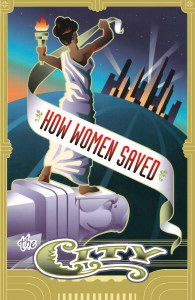
Spain uncovers the contribution of women to urban development at the turn of the twentieth century to clearly demonstrate the key role they played in shaping the American urban landscape. She reconstructs the story of women’s involvement in "redemptive places" that addressed the real needs of city dwellers—especially single women, African Americans, immigrants, and the poor.
Spain shows how women who were excluded from most forms of public life nevertheless volunteered, become reformers and activists and laid the social framework for modern city life. Spain proves how women-led groups were the first to successfully and comprehensively address social problems of housing and education in cities, and even paved the way for the social spending programs of the New Deal and beyond, as government co-opted their mission.
City Limits

In the days between the Civil War and World War I, women rarely worked outside the home, rarely went to college, and, if our histories are to be believed, rarely put their mark on the urban spaces unfolding around them. And yet, as this book clearly demonstrates, women did play a key role in shaping the American urban landscape.
To uncover the contribution of women to urban development during this period, Daphne Spain looks at the places where women participated most actively in public life—voluntary organizations like the Young Women’s Christian Association, the Salvation Army, the College Settlements Association, and the National Association of Colored Women. In the extensive building projects of these associations—boarding houses, vocational schools, settlement houses, public baths, and playgrounds—she finds clear evidence of a built environment created by women.
Exploring this environment, Spain reconstructs the story of the "redemptive places" that addressed the real needs of city dwellers—especially single women, African-Americans, immigrants, and the poor—and established an environment in which newcomers could learn to become urban Americans.
Spain shows how women who were excluded from most forms of public life nevertheless volunteered, become reformers and activists and laid the social framework for modern city life. Spain proves how women-led groups were the first to successfully and comprehensively address social problems of housing and education in cities, and even paved the way for the social spending programs of the New Deal and beyond, as government co-opted their mission.
City Limits
This valuable study highlights the important role of women in volunteer organizations that addressed urban problems and considers what groups might assume this work now.
Library Journal
Spain opens a new angle to viewing women’s work in the city that has not been previously explored. A wealth of fascinating details.
Annals of Iowa
Daphne Spain is clearly an author possessing the kind of flexible intelligence that allows her to contribute to diverse scholarly genres—in this case, architectural and planning social history. As a source book for information on lost architectural and urban history, it is a treasure. I hope both sociologists and historians will take advantage of the wealth of materials Spain has unearthed for us.
Contemporary Sociology
Spain uses an interdisciplinary approach ‘to make the invisible more visible by incorporating women’s history into urban, architectural, and planning histories.’ This makes the book a particularly useful synthesis for undergraduates and non-specialists.
Journal of the Gilded Age and Progressive Era
A comprehensive overview of a crucial era of women’s municipal reform work.
American Studies
Spain has utilized innovative research methods and heretofore untapped sources (such as fire insurance records and maps) to produce an enormous contribution to the literature. Immensely lucid and readable, broad yet detailed, Spain’s acute analyses of women’s impact on the physical and institutional structures of cultural life accomplishes its goal of documenting the impact of middle-class women’s shaping of the twentieth-century American city.
Northwest Ohio Quarterly
A solid synthesis of previous scholarship and uses case studies of voluntary organizations to document an important chapter in American urban history.
Journal of the American Planning Association
In How Women Saved the City, Daphne Spain evokes an utterly intriguing era in American city-building: a period beginning in 1870, shortly after the end of the Civil War and ending in 1920, 2 years following the close of World War I. Spain traces the largely forgotten histories of middle-class women volunteers and voluntary associations during a time of intense urbanization and social change. Overall, How Women Saved the City is an enjoyable read supplemented by a rich collection of photographs and maps.
Wendy Gibbons, Gender, Place and Culture
How Women Saved the City is enjoyable and worthwhile reading. The book is filled with excellent photographs and maps.
History of Education Quarterly
Spain’s book provides invaluable insight into the historical context in which women’s voluntary organizations evolved in North America and into how they empowered women at the time.
Journal of Planning Education and Research
Daphne Spain’s How Women Saved the City fills in gaps left by historians. A valuable contribution to our understanding of how women helped build America’s cities at the turn of the 20th century.
Journal of the West
Contents
Preface
Acknowledgments
ONE Voluntary Vernacular
TWO Why Cities Needed Saving
PART I Paths to Salvation
THREE Sacred and Secular Organizational Ideologies
FOUR Voluntary Associations with an Urban Presence
PART II Redemptive Places
FIVE New York City Headquarters, Smaller City Branches
SIX Boston, the Cradle of Redemptive Places
SEVEN Men Build Chicago's Skyline, Women Redeem the City
EIGHT How Women Saved the City
Appendix A: Literature Review
Appendix B: Organizational Charters
Appendix C: Addresses of Redemptive Places for Boston, New York City, and Chicago
Notes
References
Index