The Parasite
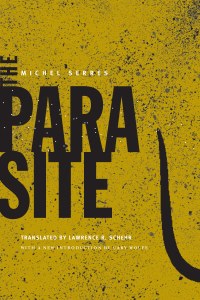
Influential philosopher Michel Serres’s foundational work uses fable to explore how human relations are identical to that of the parasite to the host body. Among Serres’s arguments is that by being pests, minor groups can become major players in public dialogue—creating diversity and complexity vital to human life and thought.
This re-release of a classic philosophical text is highly recommended.
Midwest Book Review
Influential philosopher Michel Serres’s foundational work uses fable to explore how human relations are identical to that of the parasite to the host body. Among Serres’s arguments is that by being pests, minor groups can become major players in public dialogue—creating diversity and complexity vital to human life and thought.
This re-release of a classic philosophical text is highly recommended.
Midwest Book Review
Serres is an extremely imaginative thinker with extraordinary intellectual range. Moving through fields as diverse as physics, information theory, literature, philosophy, theology, anthropology, music, art, and political economy, and through works as different as La Fontaine’s fables, Rousseau’s Confessions, Molière’s Tartuffe, Plato’s Symposium, and the Bible, Serres tries to uncover points of convergence between the natural and human sciences. Serres’s writings provide unusually rich resources.
Religious Studies Review
The richness of Serres’s work lies not only in the controlled brilliance of his theoretical constructs, it lies also in the fine detail of his readings of the texts at his disposal. He once again demonstrates what the exact sciences can learn from cultural sources they too often tend to ignore.
MLN
Here is philosophy in a new key—mercurial, elliptical, narrative. We can be thankful for this fluently translated and usefully annotated introduction to a figure who is emerging as one of the searching, provocative thinkers of our time.
Library Journal