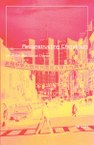
Urban Triage
Race and the Fictions of Multiculturalism
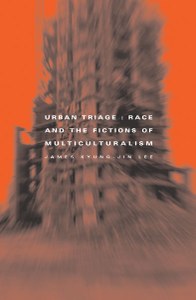
In Urban Triage, James Kyung-Jin Lee explores how the parallel 1980s trends of literary celebration and social misery manifested themselves in fictional narratives of racial anxiety by focusing on four key works: Alejandro Morales's The Brick People, John Edgar Wideman's Philadelphia Fire, Hisaye Yamamoto's "A Fire in Fontana," and Tom Wolfe's The Bonfire of the Vanities.
Urban Triage offers the amazingly compelling, accessible, and theoretically sound analyses that the fields of literary and cultural studies require for their growth.
Michael Awkward, Emory University
In the 1980s, America witnessed an explosion in the production, popularity, and influence of literary works by people of color and a decade long economic downturn that severely affected America's inner cities and the already disadvantaged communities of color that lived there. Marked by soaring levels of unemployment, homelessness, violence, drug abuse, and despair, this urban crisis gave the lie to the American dream, particularly when contrasted with the success enjoyed by the era's iconic stockbrokers and other privileged groups, whose fortunes increased dramatically under Reaganomics.
In Urban Triage, James Kyung-Jin Lee explores how these parallel trends of literary celebration and social misery manifested themselves in fictional narratives of racial anxiety by focusing on four key works: Alejandro Morales's The Brick People, John Edgar Wideman's Philadelphia Fire, Hisaye Yamamoto's "A Fire in Fontana," and Tom Wolfe's The Bonfire of the Vanities. Each of these fictions, he finds, addresses the decade's racial, ethnic, and economic inequities from differing perspectives: Morales's revisions of Chicano identity, Yamamoto's troubled invocation of the affinities between African Americans and Asian Americans, the problematic connections between black intellectuals and the black community aired by Wideman, and Wolfe's satirization of white privilege. Drawing on the fields of literary criticism, public policy, sociology, and journalism, Lee deftly assesses the success with which these multicultural fictions engaged in the debates over these issues and the extent to which they may actually have alienated the very communities that their creators purported to represent.
Challenging both the uncritical celebration of abstract multiculturalism and its simpleminded vilification, Lee roots Urban Triage in specific instances of multiracial contact and deeply informed readings of works that have been canonized within ethnic studies and of those that either remain misunderstood or were misguided from the start.
Urban Triage offers the amazingly compelling, accessible, and theoretically sound analyses that the fields of literary and cultural studies require for their growth.
Michael Awkward, Emory University
James Kyung-Jin Lee investigates the stigmata of Reaganism. Even as the forgotten urban Americans suffered the onslaught of revanchism, they wrote and sang their tomorrow songs filled with angry promise. These are Lee’s materials. The city on the hill is on fire, but before the envious ones can conduct a bonfire of our hopes, Urban Triage catalogs some of our accomplishments.
Vijay Prashad, author of The Karma of Brown Folk
Sobering and timely. Urban Triage convincingly lays out the necessity for multicultural analysis, for comparing, contrasting, and crossing over different racial experiences.
Amerasia Journal
James Kyung-Jin Lee’s astringent snapshots demonstrate that the cultural wages of multiculturalism, textually confined, do not necessarily trickle down to where they are most needed.
American Literature
Professor James Lee makes an interesting case study of how social events, as racial conflicts within the urban zones in the 1980s, manifested into the multicultural literature. James Lee’s book provokes and stimulates. Best of all, it begs for discussion.
Korean Quarterly
Among the social trends of the 1980s were two parallel phenomena—an explosion in the production and influence of literary works by people of color, and an economic downturn that brought hard times to America’s inner cities and the already disadvantaged communities that lived there. Lee (English and Asian American studies, U. of Texas at Austin) provides a close reading of four fictional works that manifest these parallel trends: Alejandro Morales’s The Brick People, John Edgar Wideman’s Philadelphia Fire, Hisaye Yamamoto’s “A Fire in Fontana,” and Tom Wolfe’s The Bonfire of the Vanities.
Book
Urban Triage negotiates a broad interdisciplinary terrain, supported by Lee’s thorough research and his attention to the formal and political ramifications of the texts he discusses (including, in some cases, the concomitance of the formal and the political).
Ethnic 3rd World, Review of Books
James Lee’s striking new study of American fiction in the 1980s foregrounds the way in which such racialized accounts of the city’s ills came to drive public policy during the decade that saw the high-water mark of literary multiculturalism. Lee’s own account of the relationship between contemporary fiction and the city offers a much more promising model for understanding contemporary literature in both its aesthetic and political dimensions.
Twentieth-Century Literature