Learning History in America
Schools, Cultures, and Politics
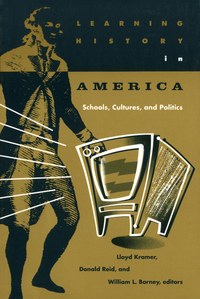
As it extends recent discussions about multiculturalism into the sphere of contemporary historical understanding, this book sets out explicitly to explore the practical and theoretical implications of these discussions for people who learn and teach history in the United States.
“Represents an excellent intervention into the debates over the canon, curriculum, multiculturalism, and popular memory. If the book only covered these issues, it would be an excellent text, but it goes a step further and analyzes questions regarding the relationship among history, authority and power as pedagogical as well as political issues. This book is brilliant in its conception, vital in its theoretical interventions, and crucial to anyone interested in history and pedagogy.” --Henry A. Giroux, Pennsylvania State University
Learning History in America represents an excellent intervention into the debates over the canon, curriculum, multiculturalism, and popular memory. If the book only covered these issues, it would be an excellent text, but it goes a step further and analyzes questions regarding the relationship among history, authority and power as pedogogical as well as political issues. This book is brilliant in its conception, vital in its theoretical interventions, and crucial to any one interested in history and pedogogy.
Henry A. Giroux, Pennsylvania State University
Hotly debated, attacked, and defended, multiculturalism has become a pervasive topic in contemporary American society, especially in the nation's schools. Despite its merits in bringing questions about ethnic diversity and national unity to the fore, this debate sorely lacks historical perspective, a shortcoming that Learning History in America seeks to correct. As it extends recent discussions about multiculturalism into the sphere of contemporary historical understanding, this book sets out explicitly to explore the practical and theoretical implications of these discussions for people who learn and teach history in the United States.
Mary Beth Norton, Dominick LaCapra, Ariel Dorfman, and Frances FitzGerald are among the authors gathered here, all of whom share a concern over how Americans learn the history of both their own society and other cultures in the world. University and secondary-school teachers, political journalists and textbook authors, an analyst of historical films, and a novelist, these writers use their personal experiences to analyze problems of historical understanding in American classrooms, popular films, and political conflicts. Drawing on new forms of historical knowledge and stressing the historical processes that create this knowledge, their essays recommend new ways to teach history in the academic curriculum, suggest critical perspectives for viewing the historical "lessons" conveyed by films or politicians, and insist on the important role that history—and historians—should play in public culture.
Learning History in America represents an excellent intervention into the debates over the canon, curriculum, multiculturalism, and popular memory. If the book only covered these issues, it would be an excellent text, but it goes a step further and analyzes questions regarding the relationship among history, authority and power as pedogogical as well as political issues. This book is brilliant in its conception, vital in its theoretical interventions, and crucial to any one interested in history and pedogogy.
Henry A. Giroux, Pennsylvania State University
This collection of essays by university-based historians, teachers of history in secondary schools, filmmakers and journalists provides a stimulating discussion of the state of history teaching in the U.S. It makes a significant contribution to current discussions of the curriculum by introducing thoughtful and concrete discussions of what is being taught, what the underlying assumptions of history teaching are, and how things have changed and why over the past ten to fifteen years. It provides a needed and welcome alternative to sterile debates about whether or not Western civilization is under siege and whether the ‘canon’ is good or bad; it does this by giving specific details about textbooks, courses, requirements, etc. The book should be useful for those who actually teach history as well as for those who have opinions about the state of history education in America today.
Joan Scott, Institute for Advanced Study
The editors recognize the need to build bridges between historians at different levels of teaching and between historians and other professionals interested in teaching. Because the selections were originally spoken, most possess an intimacy more formal papers often lack. Being critical of education-and educators-is often in vogue. There is, surely, always room for improvement, and this assessment of how history is learned includes its share of criticism. But it is also important to remember that there are many excellent teachers in the United States, and I believe the teacher contributors to this collection are representative of that excellence.
Journal of American History
The editors have selected authors with exceptional wisdom who have knowledge, balanced perspectives, and awareness of the real world of students and teachers. The authors make clear the issues they see about how history and both Western and non-Western civilization are now taught and might be taught.
Academic Library Book Review
The essays address both practical problems and more controversial issues, and the writers represent some of the diverse sources from which Americans learn about history. This book is thought-provoking and valuable to both the student and the teacher of history. The essays provide suggestions and personal examples as to how a teacher might solve some the problems facing historians today. The consideration given to popular culture and political rhetoric works especially well to illustrate that most Americans learn their history outside the classroom and that historians must therefore make an attempts to use these spaces to better inform the public. One theme of the book is the need for a ‘shared vocabulary’: can the concerns of historians be accommodated and communicated without destroying the common values and definitions which make debate possible? In the debate over ‘multiculturalism’, however, one could argue that a shared vocabulary has already disappeared. This makes the question which the editors pose, ‘. . . can historians provide a new shared vocabulary and knowledge that can encompass the fruits of their new research?’ a very timely one.
American Studies International