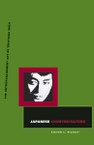
Murder Most Modern
Detective Fiction and Japanese Culture
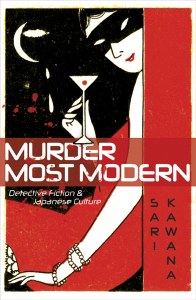
The first book-length study of interwar Japanese detective fiction, Murder Most Modern considers the important role of detective fiction in defining the country’s emergence as a modern nation-state. Sari Kawana contrasts Japanese works by Edogawa Ranpo, Unno Jūza, Oguri Mushitarō, and others with works by Edgar Allan Poe and Agatha Christie to show how Japanese writers disseminated their ideas on the most startling aspects of modern life.
Engaging, lively, and intelligent, Murder Most Modern makes an important and path-breaking contribution to the field of modern Japanese literature.
Rebecca Copeland, author of Lost Leaves: Women Writers of Meiji Japan
The quintessential international genre, detective fiction often works under the guise of popular entertainment to expose its extensive readership to complex moral questions and timely ethical dilemmas. The first book-length study of interwar Japanese detective fiction, Murder Most Modern considers the important role of detective fiction in defining the country’s emergence as a modern nation-state.
Kawana explores the interactions between the popular genre and broader discourses of modernity, nation, and ethics that circulated at this pivotal moment in Japanese history. The author contrasts Japanese works by Edogawa Ranpo, Unno Jūza, Oguri Mushitarō, and others with English-language works by Edgar Allan Poe, Dashiell Hammett, and Agatha Christie to show how Japanese writers of detective fiction used the genre to disseminate their ideas on some of the most startling aspects of modern life: the growth of urbanization, the protection and violation of privacy, the criminalization of abnormal sexuality, the dehumanization of scientific research, and the horrors of total war.
Kawana’s comparative approach reveals how Japanese authors of the genre emphasized the vital social issues that captured the attention of thrill-seeking readers—while eluding the eyes of government censors.
Engaging, lively, and intelligent, Murder Most Modern makes an important and path-breaking contribution to the field of modern Japanese literature.
Rebecca Copeland, author of Lost Leaves: Women Writers of Meiji Japan
Murder Most Modern is a timely work, filling a major gap in critical literature on Japanese detective fiction.
Dennis Washburn, author of Translating Mount Fuji: Modern Japanese Fiction and the Ethics of Identity
Kawana’s account contains many moments of insight, and its expansion of the boundaries of the field is invaluable. Murder Most Modern is likely to remain for some time the most important work in English on many of the authors it treats.
The Journal of Asian Studies
If discussions on the modern and modernity have become somewhat passe in Japanese Studies, Kawana’s readings of detective fiction against that backdrop are surprisingly exciting, fresh, and provocative.
The International Journal of Asian Studies
Murder Most Modern: Detective Fiction and Japanese Culture is academically serious but also accessible, providing wide-ranging and intelligent explication of the use and development of a popular genre in Japanese culture.
Edinburgh Review
Sari Kawana’s extraordinary book contains one of the best expositions of the underside of modernity in the Japanese context I have ever read.
Maria Flutsch, Asian Studies Review