Image Ethics in the Digital Age
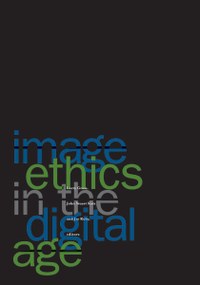
From retouching to deception, the media world is beset by ethical, legal, and professional challenges; this book brings together experts to address them.
Contributors: Howard S. Becker, Derek Bousé, Hart Cohen, Jessica M. Fishman, Paul Frosh, Faye Ginsburg, Laura Grindstaff, Dianne Hagaman, Sheldon W. Halpern, Darrell Y. Hamamoto, Marguerite Moritz, David D. Perlmutter, Dona Schwartz, Matthew Soar, Stephen E. Weil.
A consistently excellent job of articulating the principles being practiced today.
Journal of Mass Media Ethics
Over the past quarter century, dramatic technological advances in the production, manipulation, and dissemination of images have transformed the practices of journalism, entertainment, and advertising as well as the visual environment itself. From digital retouching to wholesale deception, the media world is now beset by an unprecedented range of moral, ethical, legal, and professional challenges. Image Ethics in the Digital Age brings together leading experts in the fields of journalism, media studies, and law to address these challenges and assess their implications for personal and societal values and behavior.
Among the issues raised are the threat to journalistic integrity posed by visual editing software; the monopolization of image archives by a handful of corporations and its impact on copyright and fair use laws; the instantaneous electronic distribution of images of dubious provenance around the world; the erosion of privacy and civility under the onslaught of sensationalistic twenty-four-hour television news coverage and entertainment programming; and the increasingly widespread use of surveillance cameras in public spaces. This volume of original essays is vital reading for anyone concerned with the influence of the mass media in the digital age.
Contributors: Howard S. Becker; Derek Bousé, Eastern Mediterranean U, Cyprus; Hart Cohen, U of Western Sydney; Jessica M. Fishman; Paul Frosh, Hebrew U of Jerusalem; Faye Ginsburg, New York U; Laura Grindstaff, U of California, Davis; Dianne Hagaman; Sheldon W. Halpern, Ohio State U; Darrell Y. Hamamoto, U of California, Davis; Marguerite Moritz, U of Colorado, Boulder; David D. Perlmutter, Louisiana State U; Dona Schwartz, U of Minnesota; Matthew Soar, Concordia University; Stephen E. Weil, Smithsonian Institution’s Center for Education and Museum Studies.
A consistently excellent job of articulating the principles being practiced today.
Journal of Mass Media Ethics
Many questions about ethical responsibilities abound and the reader will find these high-quality contributions to be thought-provoking and useful. Gross, Katz and Ruby’s introduction amplifies the ethical qualms occasioned by the ‘sins’ committed in the electronic darkroom and the uses of cameras, scanners and other digital technologies to manipulate and alter images. I expect that the interest in the ethical discourse can add to the ongoing development of visual studies, with the valuable contribution of this recommended volume.
Visual Studies
The anthology reaches into disciplines and perspectives well beyond American Media Criticism to find fresh ways of considering dilemmas in visual presentations. In addition, the writers often took the challenge of looking beyond the bend to contemplate ethical issues likely to be on their plates tomorrow. In doing so, they have done a consistently excellent job of articulating the principles behind practice today. There is great consistency throughout this volume as the writers balance the pragmatics of corporate ownership with the conceptual question of what should be done instead of what can be done in the creation and exploitation of an image.
Journal of Mass Media Ethics
Contents
Introduction: Image Ethics in the Digital Age Larry Gross, John Stuart Katz, and Jay Ruby
1. The Internet: Big Pictures and Interactors David D. Perlmutter
2. Professional Oversight: Policing the Credibility of Photojournalism Dona Schwartz
3. News Norms and Emotions: Pictures of Pain and Metaphors of Distress Jessica M. Fishman
4. Instant Transmission: Covering Columbine’s Victims and Villains Marguerite J. Moritz
5. Privacy and Spectacle: The Reversible Panopticon and Media-Saturated Society Larry Gross
6. Daytime Talk Shows: Ethics and Ordinary People on Television Laura Grindstaff
7. Copyright Law and the Challenge of Digital Technology Sheldon W. Halpern
8. Fair Use and the Visual Arts: Please Leave Some Room for Robin Hood Stephen E. Weil
9. Digital Technology and Stock Photography: And God Created Photoshop Paul Frosh
10. Computer-Generated Images: Wildlife and Natural History Films Derek Bousé
11. White and Wong: Race, Porn, and the World Wide Web Darrell Y. Hamamoto
12. The Advertising Photography of Richard Avedon and Sebastião Salgado Matthew Soar
13. Indigenous Media: Negotiating Control over Images Faye Ginsburg
14. “Moral Copyright”: Indigenous People and Contemporary Film Hart Cohen
15. Family Film: Ethical Implications for Consent John Stuart Katz
Afterword: Digital Image Ethics Howard S. Becker and Dianne Hagaman
Contributors
Index