America Town
Building the Outposts of Empire
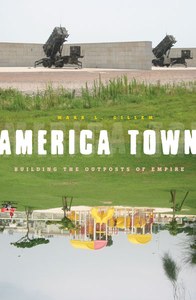
In America Town, Mark L. Gillem reveals modern military outposts as key symbols of not just American power but also consumer consumption. Through case studies of several U.S. military facilities Gillem exposes these military installations as suburban culture replicated in the form of vast green lawns, three-car garages, and big-box stores and questions the impact of this practice on the rest of the world.
When an architect and land use specialist takes a look at the huge American military bases abroad, the results are spectacular. From the small-town American housing to the bars and brothels next door to the main gates, Mark Gillem gives us new insights into the ecological dimensions of American imperialism. This is a truly original and important analysis.
Chalmers Johnson, author of Blowback, The Sorrows of Empire, and Nemesis
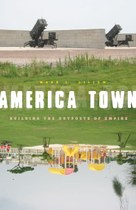
American servicemen and -women are currently stationed in more than 140 countries from Central America to Western Europe to the Middle East, often living and working on military bases that not only dominate foreign territories but also re-create familiar space that “feels like home”—gated communities filled with rambling subdivisions, franchised restaurants, and lush golf courses.
In America Town, Mark Gillem reveals modern military outposts as key symbols of not just American power but also consumer consumption. Through case studies of several U.S. military facilities—including Aviano Air Base in Italy, Osan and Kunsan Air Bases in South Korea, and Kadena Air Base in Japan—Gillem exposes these military installations as exports of the American Dream, as suburban culture replicated in the form of vast green lawns, three-car garages, and big-box stores. With passion and eloquence he questions the impact of this practice on the rest of the world, exposing the arrogance of U.S. consumption of foreign land.
Gillem contends that current U.S. military policy for its overseas troops practices avoidance—relocating military bases to isolated but well-appointed compounds designed to prevent contact with the residents. He probes the policy directives behind base building that reproduce widely spaced, abundantly paved, and extensively manicured American suburbs, regardless of the host nation’s terrain and culture or the impact on local communities living under empire’s wings.
Throughout America Town, Gillem demonstrates how the excesses of American culture are strikingly evident in the way that the U.S. military builds its outposts. The defense of the United States, he concludes, has led to the massive imposition of tract homes and strip malls on the world-creating mini-Americas that inhibit cultural understanding between U.S. troops and our allies abroad.
When an architect and land use specialist takes a look at the huge American military bases abroad, the results are spectacular. From the small-town American housing to the bars and brothels next door to the main gates, Mark Gillem gives us new insights into the ecological dimensions of American imperialism. This is a truly original and important analysis.
Chalmers Johnson, author of Blowback, The Sorrows of Empire, and Nemesis
Like imperialists immemorial, the United States rules by imposing its ideas of order. If the Romans colonized space with gridded encampments and the French with axial town plans, the U.S. exports its own indigenous pattern: suburban sprawl. America Town is a brilliant architectural and ethnographic study of the global archipelago of U.S. military installations, fragments of the homeland which-with their guard-posts, shopping malls, fast-food joints, golf-courses, parking lots, and garden apartments-make chillingly concrete the blind hubris of U.S. foreign policy. Mark Gillem has shown, with scrupulous, revelatory, clarity, that dreams-even American ones-are perilously imposed.
Michael Sorkin, author of Indefensible Space: The Architecture of the National Insecurity State
America Town illuminates an overlooked effect of U.S. arrogance. Through his perspective as a former service-member and an architect, his accessible writing, and pictorial evidence of spatial disparities, Gillem offers a disturbing depiction of how policies devised in Washington harm the lives of innocent people the world over.
In These Times
This original, remarkable, and indispensable chronicle, nay, exposé, covers the land development and architectural policies and practices that the U.S. military follows worldwide in planning, building and expanding installations of untold extent 140 countries.
Choice
Gillem has written a provocative and welcome book.
New Urban News
America Town tells a compelling story and identifies a crucial passage.
Global Change, Peace & Security
America Town is full of intriguing facts and figures. Maps and aerial photographs vividly highlight the disparities between the bases and surrounding communities, giving deeper insights into the physical environment of the base politics.
Japanese Studies
Mark Gillem’s study of America’s overseas military bases around the world is both ambitious and important. Using his unique insider knowledge as architect-planner and also former active-duty U.S. Air Force officer, Gillem has produced a book few others could attempt.
Pacific Historical Review
Mark Gillem has produced a compelling study....it supplies multiple angles for understanding the cultural and political impact of these outposts of the American empire.
American Studies
America Town is a useful source for documentation of the US military’s global extent.
Urban Studies Journal