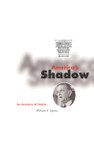
Spain's Long Shadow
The Black Legend, Off-Whiteness, and Anglo-American Empire
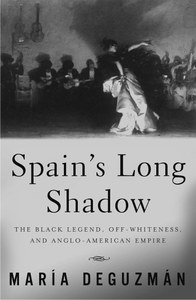
Surveying a broad range of texts and images, from Poe's “William Wilson” and John Singer Sargent's El Jaleo to Richard Wright's “Pagan Spain” and Kathy Acker's Don Quixote, Spain's Long Shadow shows how the creation of Anglo-American ethnicity as specifically American has depended on the casting of Spain as a colonial alter ego.
Spain's Long Shadow is a model of interdisciplinary scholarship that attends to both the force of national borders and the intellectual traffic that crosses them.
Michael A. Elliott, author of The Culture Concept: Writing and Difference in the Age of Realism
England and the Netherlands, Spain’s imperial rivals of the sixteenth and seventeenth centuries, imagined Spain as a land of cruel and degenerate barbarians of la leyenda negra (the Black Legend), in league with the powers of “blackest darkness” and driven by “dark motives.” In Spain’s Long Shadow, María DeGuzmán explores how this convenient demonization made its way into American culture—and proved essential to the construction of whiteness.
DeGuzmán’s work reaches from the late eighteenth century—in the wake of the American Revolution—to the present. Surveying a broad range of texts and images, from Poe’s “William Wilson” and John Singer Sargent’s El Jaleo to Richard Wright’s “Pagan Spain” and Kathy Acker’s Don Quixote, Spain’s Long Shadow shows how the creation of Anglo-American ethnicity as specifically American has depended on the casting of Spain as a colonial alter ego. The symbolic power of Spain in the American imagination, DeGuzmán argues, is not just a legacy of that nation’s colonial presence in the Americas; it lives on as well in the “blackness” of Spain and Spaniards—in the assigning of people of Spanish origin to an “off-white” racial category that reserves the designation of white for Anglo-Americans.
By demonstrating how the Anglo-American imagination needs Spain and Spaniards as figures of attraction and repulsion, DeGuzmán makes a compelling and illuminating case for treating Spain as the imperial alter ego of the United States. Cross-cultural and interdisciplinary, ambitious in its chronological sweep, and elegant in its interpretation of literary and visual works, DeGuzmán’s book leads us to a powerful new understanding of the nature—and history—of American ethnicity.
Spain's Long Shadow is a model of interdisciplinary scholarship that attends to both the force of national borders and the intellectual traffic that crosses them.
Michael A. Elliott, author of The Culture Concept: Writing and Difference in the Age of Realism
Spain’s Long Shadow makes an important contribution to the study of U.S. empire at the same time that it adds a new dimension to the study of the role of race and whiteness in the construction of U.S. national identity.
Iberoamericana
A provocative demonstration of how from the 18th century to the present the construction of an Anglo-American ethnic identity has depended on the proliferation of negative representations of Spain and the Spanish. Recommended.
Choice
There is much food for thought in Maria DeGuzman’s admirably comprehensive and learned study of race, ethnicity and the American way of life.
Bulletin of Spanish Studies
The author, with an impressive array of reading and scholarship, presents us with a list of innovative and illuminating ideas.
Bulletin of Spanish Studies
Deguzman’s argument is compelling, and it effectively incorporates readings of Spain into contemporary U.S. literary and Chicana(o) studies.
American Literature
DeGuzman offers readers an intricate and sustained argument.
American Literature
Provides intriguing readings of Europe’s influence on literature in the Americas and will prove useful to scholars seeking to internationalize their own studies and curricula.
American Literature
contents
Acknowledgments
Introduction
1. The Shadow of the Black Legend
2. Imperial Visions: Moor, Gypsy, and Indian
3. Consolidating Anglo-American Imperial Identity around the Spanish-American War
4. Sacred Bulls of Modernism
5. (Post)Modern Denaturalizations of Nationality
6. Afterlives of Empire
Notes
Bibliography
Index