Music in Cuba
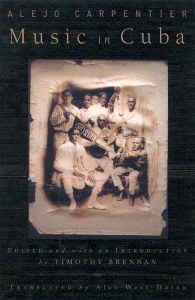
Originally published in 1946 and never before available in an English translation, Music in Cuba is not only the best and most extensive study of Cuban musical history, it is a work of literature. Drawing on such primary documents as church circulars and musical scores, Carpentier encompasses European-style elite Cuban music as well as the popular rural Spanish folk and urban Afro-Cuban music. Music in Cuba sweeps panoramically from the sixteenth to the twentieth centuries.
Alejo Carpentier’s Music In Cuba is a landmark study of the historical development of Cuban sacred, symphonic, and popular music, and of the creative tension that has always existed among them.
Latin American Research Review
In the wake of the Buena Vista Social Club, the world has rediscovered the rich musical tradition of Cuba. A unique combination of popular and elite influences, the music of this island nation has fascinated since the golden age of the son-that New World aural collision of Africa and Europe that made Cuban music the rage in Paris, New York, and Mexico beginning in the 1920s.
Originally published in 1946 and never before available in an English translation, Music in Cuba is not only the best and most extensive study of Cuban musical history, it is a work of literature in its own right. Drawing on such primary documents as obscure church circulars, dog-eared musical scores pulled from attics, and the records of the Spanish colonial authorities, Music in Cuba sweeps panoramically from the sixteenth into the twentieth century. Carpentier covers European-style elite Cuban music as well as the popular rural Spanish folk and urban Afro-Cuban music.
In a substantial introduction based on extensive original research, Timothy Brennan explores Carpentier’s career prior to the writing of his novels. Looking especially at Carpentier's work as a music reviewer, radio producer, and musical theorist, Brennan suggests new ways of thinking about the role of Latin American artists in Europe between the wars and about the central place of radio and music-club cultures in the European avant-gardes.
Perhaps Cuba’s most important intellectual of the twentieth century, Alejo Carpentier (1904–1980) was a novelist, a classically trained pianist and musicologist, a producer of avant-garde radio programming, and an influential theorist of politics and literature. Best known for his novels, Carpentier also collaborated with such luminaries as Igor Stravinsky, Darius Milhaud, Georges Bataille, and Antonin Artaud. Born in Havana, he lived for many years in France and Venezuela but returned to Cuba after the 1959 revolution.
Alejo Carpentier’s Music In Cuba is a landmark study of the historical development of Cuban sacred, symphonic, and popular music, and of the creative tension that has always existed among them.
Latin American Research Review
Music in Cuba is a pioneering chronicle of the historical confluence of two musical streams, from Europe and Africa, that produced the special richness of the Cuban musical tradition. Remarkable, groundbreaking and indispensable. This first translation is elegantly produced, with an extensive introduction by Timothy Brennan, who situates Carpentier in the historical matrix of race and class in Cuba and the debates of today’s theorists of cultural globalization.
Times Literary Supplement (London)
This study, at times encyclopedic, is buoyed by a simmering outrage at the treatment of blacks and a patriotic spirit inclusive of all Latin America. As set down by a master writer, Music in Cuba deserves as much platinum as Ry Cooder and the latest soneros.
Paper Magazine
One of the most influential books on Cuba’s musical heritage, which is revered as a bible by musicians and students of Cuban and Latin music. Carpentier’s profiles of well-known and little-known Cuban musicians and composers from the seventeenth to the twentieth century are invaluable. Alejo Carpentier’s book is a well-written and well-researched work that gives us a rich, concise examination of the musical mosaic of Cuba and, ultimately, the Americas.
Hispanic Magazine
Music in Cuba is a first-rate, accurately written account of a subject that is at once fascinating as well as mysterious. For lovers of Cuban music, this is one of the finest reference books to date on Cuban music, and its clear and lucid prose takes the reader on a highly educational and entertaining journal. This work is the foundation for all other studies, and until 2001 was unavailable in English translation. Originally published in 1946 it remains fascinating reading material. Readers and those interested in Cuban musical history will find Music in Cuba entertaining, well-written, and an excellent reference to have in the home library. This is one book every jazz listener will want to own, and it is a book that will appeal to anybody interested in the creative music of Cuba, and Cuba’s unique heritage of Spanish and Afro-Cuban music. An excellent historical document, entertaining, enjoyable, an a reliable resource on Cuban music.
The Jazz Review
Magisterially describes the earliest roots of Cuban music in Roman Catholic church music and slave culture.
Christian Science Monitor
Invaluable to experts and novices alike. This book truly bestows on its readers an array of theoretical resources for countering aesthetic and societal clichés. Bravo!
MultiCultural Review
Alejo Carpentier’s Music in Cuba continues to be the most comprehensive study of Cuban music, serving those interested not only in the history of its folk, popular, and classical music but also in the relationship between its music and those related traditions throughout the Caribbean and Latin America.
Journal of Musicological Research